

Ask a Chinese adult what Lunar New Year smells like and the answers are predictable — dumplings, tangerines, the faint smokiness of firecrackers. Ask what it looks like and the answer is almost always the same: red paper on the door. The couplets, the Fu character, the paper cuttings on the windows — decorations are not a backdrop to the holiday, they are how a house becomes ready for it. And because most of them are made of paper and paste, they are one of the few holiday traditions children can genuinely help build, not just watch. Lunar New Year 2027 falls on February 6, which means the decorating window opens soon. This guide covers what each decoration means, where it goes, what jobs kids can do at every age, and how to keep the whole project safe and fun. (If you want decorations styled for photos instead, our photoshoot props guide covers that separately.)
What Each Decoration Means
None of this is decoration for decoration’s sake — every piece says something, and kids love learning the “why” before hanging it up:
- Spring couplets (chunlian). Two strips of red paper with lines of good wishes, pasted on either side of the front door. They are written in matching rhythm, one line facing the other, and they are the single most recognizable signal that a family is ready for the new year.
- The Fu character. One large character meaning “fortune” or “blessing,” usually on a diamond of red paper. Tradition says to paste it upside down on the front door: the word for “arrive” sounds like the word for “upside down,” so an inverted Fu means fortune has arrived. Children find this detail endlessly satisfying — a rule that only works because of a pun.
- Paper cuttings (jianzhi). Intricate red cut-paper designs — flowers, zodiac animals, characters — stuck on windows. Light passes through them, which is why they belong on glass and not on walls.
- Lanterns. Red lanterns hung at the door or by windows. They stay up through the Lantern Festival on February 20, fifteen days after New Year’s Day, when the holiday formally ends — our Lantern Festival guide covers that finale.
- Zodiac imagery. 2027 is the Year of the Goat, so goat figures appear everywhere — on cuttings, stickers, plush toys and ornaments. The zodiac guide explains the system if your kids want to know why the goat gets top billing.
When to Decorate, and the Order That Makes Sense
The traditional sequence is satisfying and worth keeping even in a busy household: sweep first, decorate second. In the days before New Year’s Eve the house gets a thorough clean — sweeping out the old year — and only then do the decorations go up, so good fortune lands on a clean house rather than a dusty one. On New Year’s Day itself, sweeping is traditionally paused so the new luck isn’t swept out the door. Most families decorate during the last three or four days of January 2027; the couplets usually go up on New Year’s Eve itself or the day before.
One more reason to start early: kids tire of projects quickly, and spreading the decorating over a weekend — windows on Saturday, door on Sunday — keeps every session short and fun rather than turning it into a chore.
Age-by-Age Decorating Jobs
- Ages 2-4: the placement crew. Too young for scissors, perfectly able to press stickers. Give them the window stickers, the easiest peel-and-stick Fu diamonds, and one flat wall or low door panel that is officially “theirs.” Their installation will be crooked and they will be proud of it — that is the point. Coloring versions of cuttings and lanterns are widely available and make a calm pre-nap activity.
- Ages 5-8: the cutting crew. Safety scissors and pre-folded red paper turn children into paper-cutting apprentices. Start with symmetrical beginner designs — folded paper opened into a flower or a simple goat silhouette gets an instant wow-reaction. They can also mix the paste, hold the level for the couplets and shout “a little left!” with real authority.
- Ages 9 and up: the brush crew. Older kids can attempt brush calligraphy — even a wobbly first Fu character becomes next year’s sentimental keepsake. Many families paste the child’s handwritten attempt alongside the printed couplets, and grandparents rate the handmade one above the store version every time. This age group can also lead the lantern hanging (with adult supervision for anything above reach).
The same spirit runs through our other hands-on holiday guides — red envelope crafts for the gifting table and cooking activities for the kitchen — and families who celebrate Christmas too often pair this project with the activities in our advent calendar guide, one tradition feeding the other.
Where Everything Goes (and Why)
- Front door: couplets flanking the frame, inverted Fu diamond on the door itself. This is the family’s public face for the holiday — the one decoration every visitor sees.
- Windows: paper cuttings, pressed against the glass so daylight lights them up. A child’s bedroom window is a legitimate and much-loved placement.
- Entryway and living room: lanterns, goat ornaments, a bowl of tangerines on the table. Keep walkways clear — doorways will have heavy foot traffic all fortnight.
- Not over beds or above where toddlers reach: paper and string invitations to climb. Decorations at toddler eye level should be sticker-flat, not dangling.
Safety Notes Worth Reading Twice
- LED candles only. Traditional lanterns were lit by flame; every modern family version should use battery LEDs, especially with children in the house.
- Cord discipline. String lights and hanging lanterns belong above head height; cords taped flat along walls, never draped where a child can pull.
- Scissors and paste, not blades. Paper cutting for kids means safety scissors and pre-folded paper. Craft knives stay with adults, full stop.
- Step stool rules. One adult holds the stool, one child places — no solo ladder work for the enthusiastic nine-year-old.
- Small parts. Ornament hooks, twist ties and tiny goat figurines are choking hazards for under-threes; our toddler safety checklist applies just as much to decorating day as to dressing day.
Decoration Day Outfits
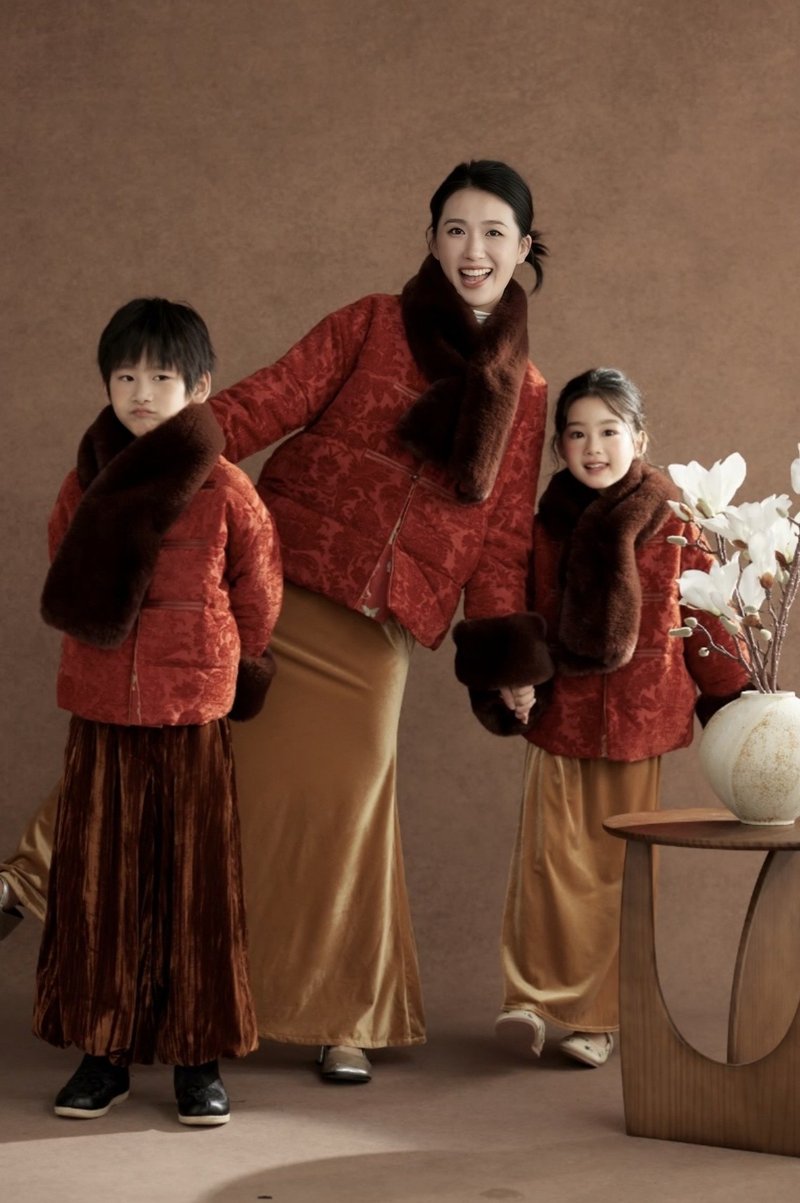
There is a reason Chinese families often dress the children in something festive for decorating day itself: the photos of a small child pressing a Fu character onto the door, tongue out in concentration, become family classics. The practical formula is simple — festive top, washable everything, freedom to raise both arms overhead. A brocade vest over a soft long-sleeve gives the holiday look without restricting a reaching, stretching, paste-wielding helper; the collection page has children’s pieces built exactly for this, and the layering guide keeps the look warm in an unheated entryway.
Wash whatever they wore before the decorations go up for New Year’s Eve dinner — the wash-and-store guide covers the routine — and size by height, not by guess, using the cm sizing chart.
Keep the Keepsakes
One quiet tradition worth stealing from experienced families: date the child’s handmade pieces. A pencil note on the back of a paper cutting — name, age, year — turns a January craft session into a fifteen-year archive. Many families keep one box of New Year decorations that only the children’s pieces enter, and unpacking it each February becomes its own small ceremony. Paper fades and tears, so photograph the fragile ones flat against white card before they retire; the best of those photos graduate into next year’s New Year cards.
Frequently Asked Questions
When exactly should we put up the decorations?
Any time in the final week of January 2027 works, with couplets traditionally pasted on New Year’s Eve (February 5) or the day before. Sweep and clean first — decorations on a freshly cleaned house is the tradition, and kids can own the “clean team” job as part of the project.
When do the decorations come down?
Traditionally after the Lantern Festival on February 20, which ends the fifteen-day holiday. Leaving lanterns up a few extra days harms nothing; the couplets usually stay until they weather, then come down with thanks.
Can we decorate if we live in an apartment or outside China?
The front door, one window and the dinner table are enough. A couplet pair, an inverted Fu and a paper cutting or two read instantly to anyone who knows the holiday, and they fit any rented wall — removable adhesive strips spare the deposit.
What if our child’s paper cuttings keep tearing?
Switch to pre-folded heavier paper and simpler symmetric designs, and let the adult do the final unfold — most tears happen at the unfolding moment, which is also exactly the moment kids most want to do themselves. Practicing on scrap paper first saves both paper and morale.
Are there decorations kids should not touch?
Anything electrical, anything with flame (which should not exist in a family display anyway — LEDs only), and fragile ornaments placed high on purpose. Everything else is fair game; the tradition survives being handled by small hands. It was made by them, originally.
How do decorations connect to the rest of the holiday?
They set the stage: the decorated door frames the reunion dinner, the greetings and red envelopes of New Year’s Day, and every photo taken in between. The fifteen-day traditions guide shows how decorating day fits into the full calendar from New Year’s Eve to the Lantern Festival.