
Lunar New Year 2027 begins on Saturday, February 6, and it ushers in the Year of the Goat. If your family celebrates Chinese heritage alongside Western holidays, or your child is learning about the festival at school, this guide walks through the traditions one by one: what happens, when, why, and what role children play in each of them. No prior knowledge needed, and no obligation to do everything. Most families pick the traditions that fit their home and skip the rest.
What Lunar New Year actually is
Chinese New Year follows the lunar calendar, so its date moves each year between late January and mid-February. The holiday is really a season rather than a single day: families gather on New Year’s Eve for a reunion dinner, then celebrate through roughly two weeks of visits, foods and small ceremonies, until the Lantern Festival closes the season on the fifteenth day. At its heart, the holiday is about two things: family, and a fresh start. Everything else hangs off those two hooks.
For children, that structure is good news. The holiday unfolds in small, repeatable rituals rather than one long event, which means there are many little moments for a child to feel included, not just one high-pressure day.
Before the day: cleaning and decorating
In the days before New Year’s Eve, families give the house a thorough cleaning. The idea is to sweep out the stale luck of the old year so the new one starts fresh. Then, once the cleaning is done, the sweeping stops: on New Year’s Day itself, traditionally nobody sweeps, so that the new year’s good fortune is not swept out the door.
Decorating is where children shine. Red paper couplets with hopeful phrases go beside the front door, the character for good fortune is hung on walls, sometimes upside down as a wordplay because “upside down” sounds like “arrived,” and red lanterns go up in windows. Give kids real jobs: hanging the lanterns, choosing where the lucky character goes, helping mix the paste. The traditions stick better when children’s hands are in them.
Reunion dinner: the meal where everything means something
New Year’s Eve dinner is the emotional center of the holiday, and the menu is quietly symbolic. Dumplings are shaped like old Chinese gold ingots, so folding them together stands for wealth in the year ahead. A whole fish is served because the word for fish sounds like the word for abundance, and part of it is traditionally saved for later, so the surplus “carries over.” Sticky rice cake, called niangao, sounds like “higher year,” a wish for children to grow and families to rise. Even spring rolls resemble little bars of gold.
None of this needs a lecture. Fold dumplings at the table and mention the ingot shape once; children remember what they make far better than what they are told.
Red envelopes: the etiquette worth teaching
The tradition children know first is the red envelope, or hongbao: crisp banknotes in a red packet, given by parents and elders to children at New Year. The money matters less than the ritual around it, and a few pieces of etiquette turn the moment from a grab into a grace:
- Receive the envelope with both hands.
- Greet the giver first. A simple “xinnian hao,” meaning happy new year, or “gongxi facai,” a wish for prosperity, is the classic move.
- Do not open the envelope in front of the giver.
- Say thank you, and mean it.
Children who learn these four moves at four years old will still be charming relatives at fourteen. That is the whole point of etiquette: it is a costume of courtesy kids get to keep.
New clothes in lucky colors
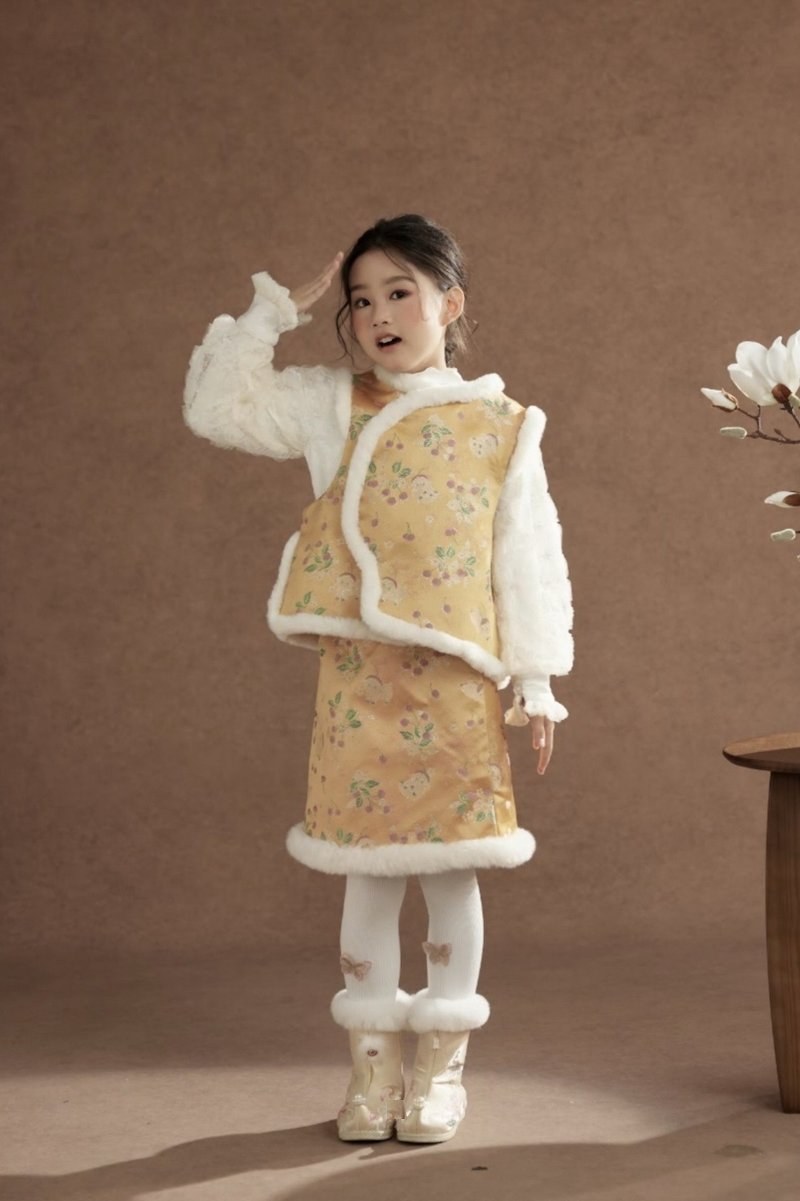
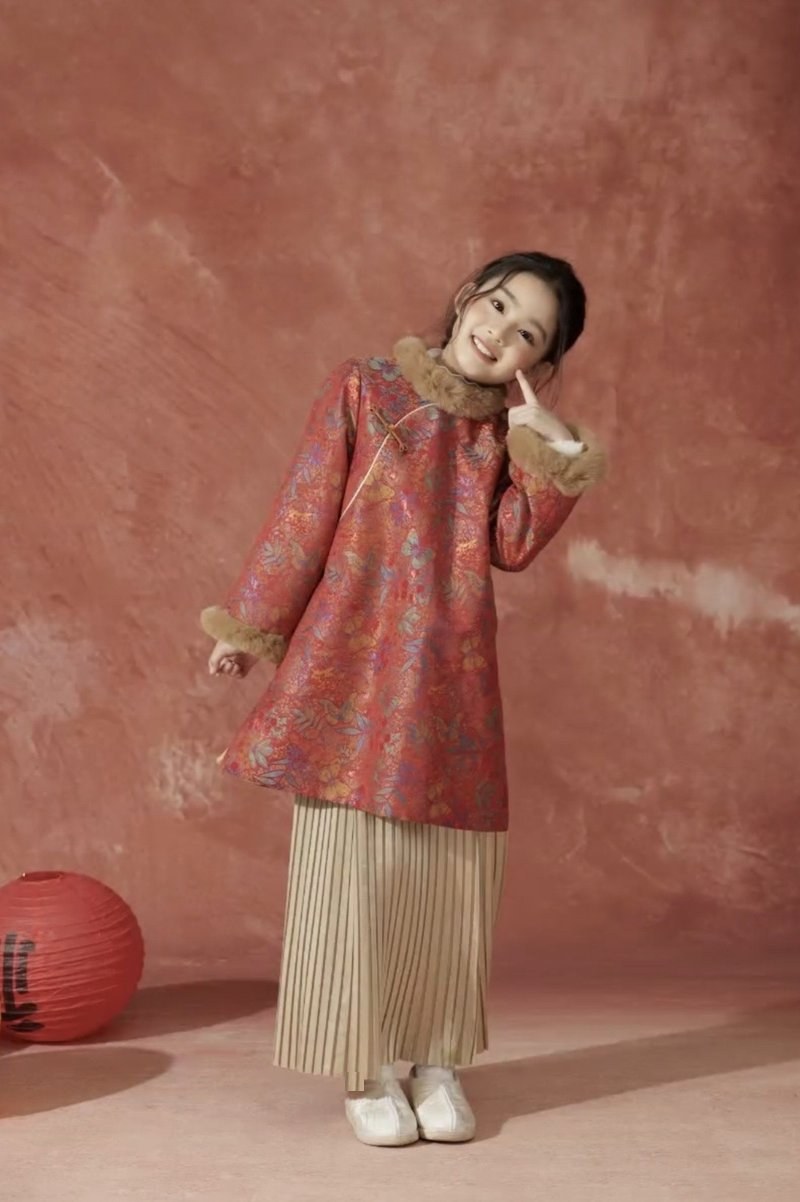
Wearing something new for the new year is a tradition in itself, and red is the color that carries the most weight, a link to the old folktale of Nian, the beast said to fear the color. Gold and warm yellow pair with it happily. Two gentle notes for parents: all-white or all-black outfits traditionally read as mourning colors, so most families save them, and not every child loves red. That is fine. Deep blues, greens and yellow-golds are all part of a festive wardrobe; the “new” matters as much as the color.
If you are building the outfit, our piece on why Chinese children wear red tells the story kids love, and the practical picks by age are covered in the toddler New Year guide, the boys’ hanfu guide and the girls’ qipao guide.
Bai nian: the rounds of family visits
After the first day at home, the holiday becomes a touring season. Families visit grandparents, aunts, uncles and old friends, carrying gifts and good wishes; children come along, practice their envelope etiquette, and are fed relentlessly. For families far from relatives, the tradition translates easily: video-call the grandparents in their best clothes, visit the elders who matter to your family, or gather with the friends who count as family. Our family visit outfit guide covers what works when the day involves coats off, floors sat on, and cousins to keep up with.
The Lantern Festival finale
On the fifteenth night, the season ends with a glow. Families carry or admire lanterns, solve riddles written on hanging slips of paper, and eat tangyuan, the sweet glutinous rice balls whose round shape stands for the family staying together. For children it is the most magical evening of the season: lights, a puzzle to solve, and dessert with a story attached. Make simple paper lanterns at home in the week before, write your own easy riddles, and you have a school-project and a family night in one.
The zodiac: welcoming the Year of the Goat
Each lunar year is named for one of twelve animals, cycling in order, and 2027 is the Goat’s turn. The animals of the cycle are a story children take to immediately: which animal is yours, which is mom’s, which is the dog next door. The goat is traditionally described as gentle, creative and artistic, which gives every child born in a goat year a small, flattering legend to grow into. A rainy-afternoon activity: have kids draw all twelve animals in order and circle everyone in the family.
What kids wear, moment by moment
- New Year’s Eve dinner: the fullest look of the season, such as a red-and-gold brocade two-piece with a plush collar.
- Envelope mornings: something festive but floor-friendly, like a padded jacket set that survives being handed from lap to lap.
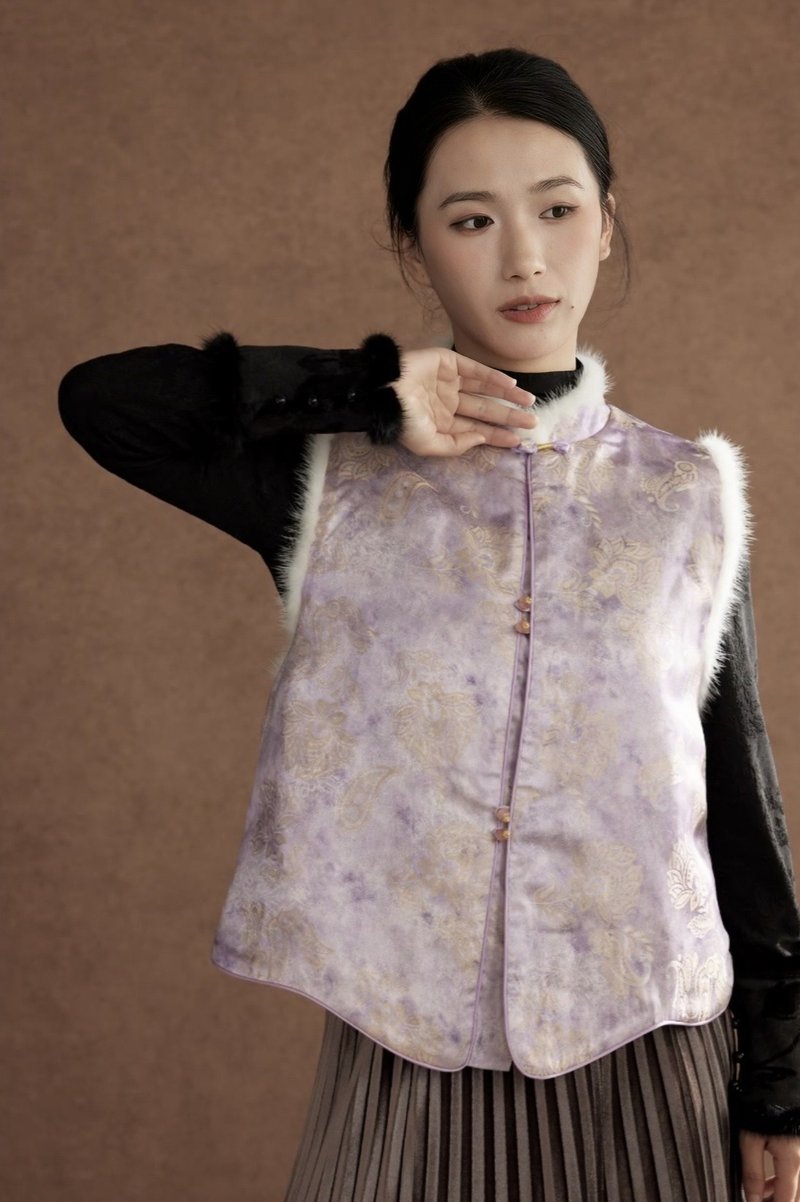
- Family visit rounds: layers that come off gracefully indoors; a vest over a soft shirt keeps the ceremony while the shirt does the work.
- Lantern Festival night: warm layers underneath and something bright on top, because the evening is spent outside among lights.
The three questions parents always ask
Can children actually move in festive outfits? Yes, if the cut is right. Pleated and A-line skirts swing instead of clamping, soft waists stretch, and generous sleeves let a child fold dumplings, accept envelopes with both hands and climb into a car seat unaided. Save anything stiff for the photo, not the whole day.
Is it safe? Choose pieces with sewn-down frog buttons rather than loose small parts, soft interior seams, and no long drawstrings at the neck, which children’s clothing safety standards discourage. Our children’s line is lab-tested to GB 31701-2015 Class A, the Chinese national safety standard for infant and children’s textiles, as noted on the collection page.
What about washing after two weeks of festivities? Most cotton and cotton-blend pieces take a gentle cold cycle inside a laundry bag; jacquard and velvet prefer cold hand washes and air drying away from heat. The full routine, including stain first aid, is in our washing and storage guide.
Frequently asked questions
What sizes does kids’ festive hanfu come in?
Our chart runs from about 90 cm to 150 cm in height. Roughly: 100 cm fits around US 3T-4T, 110 cm around 4T-5T, 120 cm around US 6-7 years, 130 cm around 8, 140 cm around 10, and 150 cm around 12. Between two sizes, take the larger; the full table is in our cm-based sizing guide.
When should we start preparing for Lunar New Year 2027?
The holiday falls on February 6, 2027, so December is a comfortable month to plan: choose outfits while full size runs are in stock, order made-to-order pieces early since they take about 3-5 weeks, and let bulk wholesale orders, typically 6-10 weeks, be placed by November if you are stocking a boutique.
Do we have to do every tradition?
No. Families in and outside China all adapt: some do the full fifteen days, others keep the reunion dinner, the envelopes and one outfit day. Pick what your family will actually repeat next year; consistency beats completeness.
Is it okay for non-Chinese families to celebrate with kids?
Yes, when the spirit is learning and honoring rather than borrowing. Explain what each tradition means, keep the food and crafts hands-on, and the festival works beautifully as a cultural lesson at home or in a classroom. Teachers building a cultural unit can draw on our school cultural day guide.
Where can we see real outfits for the holiday?
The AW2026 winter line, including brocade sets, padded jackets and velvet pieces, is on the collection page. Families order there directly; boutiques planning holiday stock can request terms, with set prices typically $45-120 and a 12-piece minimum, on the wholesale page.
February 6 is closer than it looks. Pick three traditions, one outfit, and one batch of dumplings, and the Year of the Goat will arrive with your family already in step.
[…] the wider festival context, our Chinese New Year traditions guide for kids walks through the full fifteen days of the holiday; this article zooms in on the animal that names […]
[…] you are starting from zero, our Chinese New Year traditions guide for kids walks through all fifteen days of the season; this article zooms in on the night that closes […]
[…] in front of the giver – hand it to a parent to hold. That is nearly all a child needs. Our family guide to New Year traditions walks through the full etiquette, including what parents do with the envelopes […]
[…] to help and is now googling at midnight. If you want the deeper cultural background first, our fifteen-day traditions guide for kids covers the whole festival; this page is purely about the […]
[…] but the sweet spot is before New Year’s Eve. If you want the cultural backdrop first, our fifteen-day traditions guide for kids explains the festival this card […]