
Every winter, teachers around the world get the same request: can we do something for Chinese New Year? And every winter, the honest answer is yes — with a plan. Lunar New Year 2027 falls on Saturday, February 6, which means most school parties will land on the Friday before or the week after, while the fifteen-day festival is still in full swing. This guide lays out one classroom party, start to finish: a minute-by-minute schedule, four activity stations that have proven themselves in real rooms, the food rules that keep everyone safe, and what children can wear without the day turning into a costume contest.
It is written for two audiences at once — the teacher running the room, and the room parent who volunteered to help and is now googling at midnight. If you want the deeper cultural background first, our fifteen-day traditions guide for kids covers the whole festival; this page is purely about the party.
Pick the Date, Then the Shape of the Party
Because February 6, 2027 is a Saturday, the natural slots are Friday, February 5 — high energy, anticipatory, everything is “about to happen” — or the following week, when families are mid-celebration and children have real stories to tell. Both work. The shape we recommend is a 75-minute block, which fits a morning or an afternoon without wrecking the rest of the timetable:
- 0:00-0:10 — Welcome and story. One picture book or a three-minute retelling of the Nian legend (the folktale version, not the lecture version). This sets up why everything is red.
- 0:10-0:45 — Station rotation. Four stations, small groups rotating every eight or nine minutes. The meat of the party.
- 0:45-1:00 — Snack and greetings practice. Food rules below; while children eat, rehearse one greeting and the bow.
- 1:00-1:15 — Closing parade and photo. Children carry their crafts around the room or down the hallway, one class photo, done.
Four Stations That Work
Station 1: Red envelope crafts. The single most requested activity, and deservedly so — children fold, decorate and take home their own hongbao. Our red envelope crafts guide has five graded versions, from a ten-minute folded-paper envelope for six-year-olds to a coloring version toddlers can do; the classroom logistics section is written for exactly this kind of rotation.
Station 2: Paper cuts and paper lanterns. Fold red paper, cut a simple symmetrical shape, unfold — instant window decoration with real folk roots. Pair it with a folded paper lantern and the room decor builds itself as the party runs. The lantern tradition, riddles included, is covered in our Lantern Festival guide if you want to stretch the theme to the festival’s finale.
Station 3: Greetings and the bow. Two minutes per rotation is enough to teach one greeting with its meaning and the two-hands fist-and-palm bow. Children practice on each other; the full five-greeting set with pinyin and a two-week practice plan lives in our CNY greetings guide for kids.
Station 4: The zodiac corner. 2027 is the Year of the Goat — children find their own zodiac animal by birth year, draw it, or match animal cards. It reliably produces the loudest laughter in the room, especially when children discover their teacher’s animal.
Optional fifth station for rooms with a parent volunteer to spare: a photo corner with simple props — our photoshoot props guide lists lanterns, fu characters, tangerines and safe setup ideas that translate directly to a classroom corner.
Food Rules, Stated Plainly
- Default to no-cook and allergy-aware. Tangerines or mandarins are the classic choice — gold, round, symbolic of luck — alongside plain crackers or rice snacks. Collect allergy lists in advance the way you would for any party.
- If you serve tangyuan or rice balls, cut them small. Whole glutinous rice balls are a genuine choking hazard for children under four; halve or quarter them and keep an adult at the table. Our Lantern Festival guide covers the safety detail.
- Skip chopsticks as a requirement. Offer them as a try-it challenge, not a skill test — a child who eats their snack with a fork is still fully participating.
The Greeting Rehearsal
One greeting, done properly, beats five done sloppily. Teach the meaning in one sentence, model the bow with both hands, then let every child do it three times — to a partner, to the teacher, to the class. Parents who want to keep the streak alive at home can use the two-week practice calendar in the greetings guide, and the table manners that surround the real family dinner are in our reunion dinner guide.
What Kids Wear to the Party
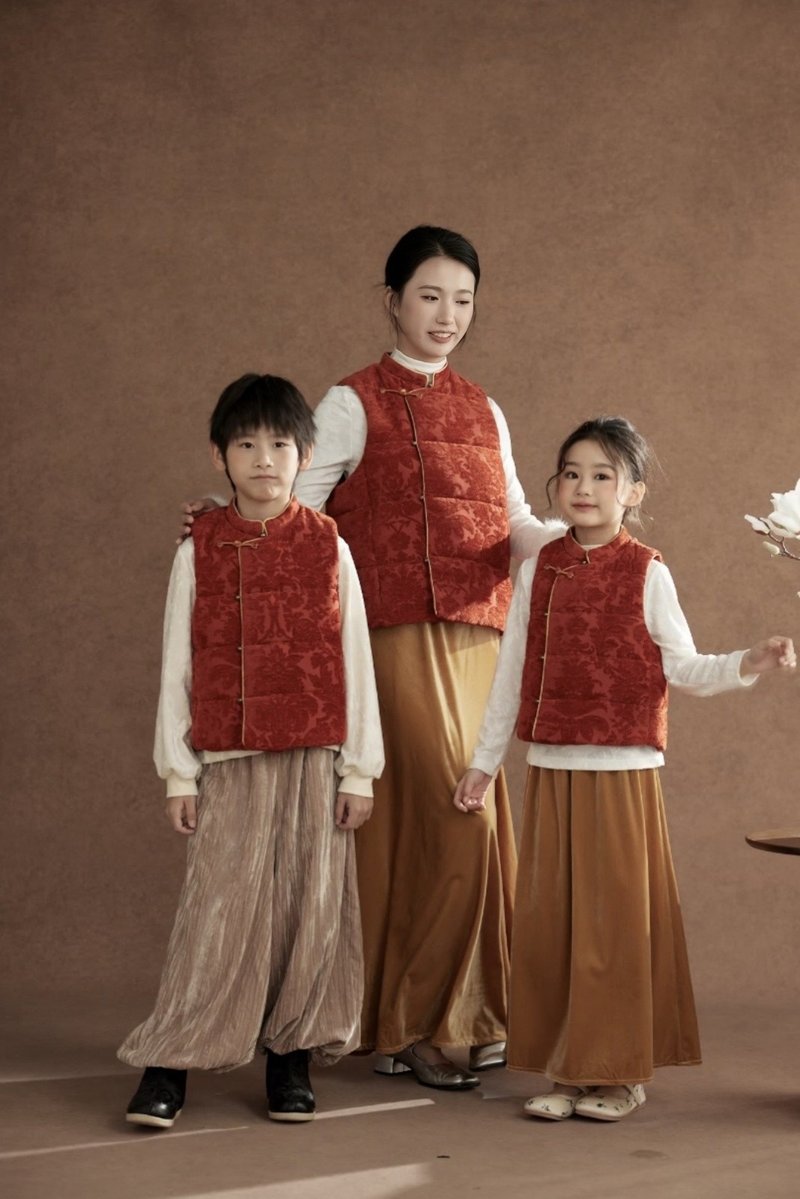
The honest answer: anything festive and comfortable works, and no child should feel obligated to own a full traditional outfit. That said, the children who do wear one become the party’s walking show-and-tell, so it helps to give families gentle options in the class newsletter:
- One festive piece is enough. A red top, a brocade vest over ordinary clothes, or a skirt — the Lunar New Year red outfits guide shows single pieces that pair with everyday wardrobes.
- For boys, a mandarin-collar tang jacket is the low-effort, high-impact choice: comfortable, familiar-looking, quietly festive.
- For girls, options range from a qipao-style dress to a two-piece set; the school-party sweet spot is something a child can sit on the carpet in.
- Teachers sometimes ask what they should wear — a scarf or accessory in festival red is a kind gesture and never a requirement. The generic school-event playbook (what fits an international week or cultural day, and how to brief families) is in our school cultural day guide.
The Practical Three: Washing, Safety, Movement
- Washing — whatever the party leaves on the clothes (glue, paint pen, crumbs): delicate cycle, cold to warm water, inside out for brocade and velvet, hung to dry. The full routine is in the wash-and-store guide.
- Safety — our children’s line is tested to GB31701-2015 Class A by a CNAS-accredited lab, the children’s clothing safety standard used in China, with sewn closures and no drawstrings at the hood or neck. The quick two-minute button-and-tie check before the day is in the toddler safety checklist.
- Movement — carpet time, station rotation and the closing parade all mean floor-sitting, reaching and walking in line. Soft waistbands, wide trousers and sleeves with room are the design brief, so children never have to be careful in their holiday clothes.
Sizing in Centimeters and US Sizes
| Height (cm) | Approx. US size | Approx. age |
| 100 cm | 3T-4T | 3-4 years |
| 110 cm | 4T-5T | 4-5 years |
| 120 cm | US 6-7 | 6-7 years |
| 130 cm | US 8 | 8 years |
| 140 cm | US 10 | 10 years |
| 150 cm | US 12 | 12 years |
Order by height, allow room for a winter base layer, and when in doubt size up — the kids’ sizing chart explains the fit rule.
Frequently Asked Questions
Should the party be before or after Chinese New Year?
Both work. Before feels anticipatory and teaches the traditions as they are about to happen; after lets children who celebrate at home share real photos and stories. For 2027, Friday February 5 and the week of February 8 are the natural slots.
What if most of the class does not celebrate Lunar New Year?
Frame it the way you would any cultural celebration — a festival with a story, crafts and food, open to everyone. Children who celebrate become the experts; children who do not simply join in. That framing, plus family briefing tips, is in the school cultural day guide linked above.
Do families need to buy outfits for the party?
No. A red shirt is enough. If a family does want one piece, a vest or tang jacket over ordinary clothes is the affordable middle ground, and it re-wears for the actual family dinners — nothing gets bought for one afternoon.
How do we handle food allergies at a festival party?
Collect allergy lists with the permission slips, keep the menu no-cook, and label anything homemade. The tangerine-and-crackers default avoids most common allergens; the rice-ball choking rule above matters more than exotic menu choices.
Can younger siblings attend?
If your school allows it, keep the crafts age-graded — the coloring version of the envelope craft exists precisely so two- and three-year-olds can participate at the same table as their older siblings.