
Ask any Chinese child what the best part of Lunar New Year is and the answer is rarely the food — it is the red envelopes. Hongbao, the small red packets filled with “lucky money”, are the tradition children remember for a lifetime, and an increasing number of families have turned them into something even better: a craft project. Making your own envelopes has become a classroom staple and a weekend activity in bicultural households, because it gives children ownership of the tradition — a five-year-old who folded, decorated and personally handed over an envelope is not watching the custom, they are doing it.
This guide collects five red envelope crafts for kids that we have seen work in real homes and classrooms, from a ten-minute folded-paper version to a keepsake felt envelope that survives the year in a memory box. Along the way: what the tradition actually means (in folklore terms, not lecture terms), the gifting manners worth rehearsing, classroom logistics for a whole class of kindergarteners, and the practical questions — what to wear, washing, safety, movement and sizing. If your child is still learning what to say when they hand one over, our CNY greetings guide for kids covers the phrases and the bow.
The Tradition, Briefly and Honestly
A red envelope is money given in a red packet at Lunar New Year — usually from elders to children, and from adults to the children of friends and relatives. The red color is the message: in Chinese tradition red is the color of luck and protection, and the story most children learn is that the color keeps misfortune away at the turn of the year (the full tale, told the fun way, is in our why kids wear red guide). The amount matters far less than the gesture; coins, a few dollars, or a hand-written IOU for a hug all count in a family craft context.
Handmade envelopes are not a break from tradition — they are the tradition doing what it has always done. Before printed hongbao were everywhere, envelopes were folded at home from red paper, and grandparents still tell stories of the ones they folded as children. For Lunar New Year 2027 (February 6), handmade envelopes have an extra hook: it is the Year of the Goat, and goats are genuinely fun to draw.
Craft 1: The Classic Folded Paper Envelope
This is the ten-minute version, no template needed, and it is the one to start with because the folding itself is the skill:
- Materials: red paper (any red craft paper; A4 works), a glue stick, and a gold paint pen or gold paper scraps.
- Fold: cut the sheet to roughly 20 × 28 cm, fold the bottom two-thirds up, then fold the top flap down over it — you now have a pocket. Glue the side seams only; the top flap stays openable.
- Decorate: a gold circle on the flap reads as a traditional seal, or children can draw the animal of the year inside it. A single Chinese character traced from a printed sheet (fu, meaning good fortune) is a favorite finishing touch.
The honest expectation-setting: first envelopes come out crooked, and that is the charm. Kids aged six and up manage the folds solo; younger ones fold and an adult glues.
Craft 2: The Decorate-a-Real-Envelope Station
For families short on time — or classrooms of thirty — buy plain red envelopes in bulk and turn decoration into the whole activity. Set out gold paint pens, small stickers (goats, tangerines, plum blossoms), and washi tape, and let children personalize one envelope per relative. This is the version most worth doing carefully: the envelopes will actually be given away, which makes the handwriting practice real. Have children write the recipient’s name and a one-line wish on the front — “for Grandma, happy new year” — and you have combined a craft, a writing exercise and an etiquette rehearsal in one sitting.
Craft 3: The Paper-Cut Goat-Year Envelope
Paper cutting is a genuine Chinese New Year craft — window decorations are cut red paper all over China every winter — and a simple version translates well to envelopes. Children fold a scrap of red paper in half, draw half a goat (or half a flower for beginners), cut along the line, and unfold a symmetrical shape to glue onto the envelope front. Safety scissors do the job fine for ages five and up. The result looks far more skilled than the effort involved, which is exactly what you want from a craft a proud child plans to hand to a grandparent.
Craft 4: The Felt Keepsake Envelope
The paper versions get given away; this one stays. Cut two rectangles of red felt, a smaller gold felt rectangle for the flap trim, and glue or blanket-stitch the sides together, leaving the top open. Older children can run a simple running stitch around the edges — a genuinely good first sewing project, since felt does not fray and mistakes are invisible. The keepsake envelope becomes the home for the year’s lucky money, or the “bank” that holds one coin from each relative’s envelope after the real contents have been spent. Families who started this habit report the same thing: the felt envelope outlives the holiday by years.
Craft 5: The Toddler Coloring Envelope
Two- and three-year-olds should not be excluded from the giving. Print or draw a simple envelope outline on white paper — a rectangle with a flap line — and let toddlers color it red as best they can, adding sticker “seals”. An adult folds and glues it into shape afterward. The envelope will look abstract, and the grandparents receiving it will treat it like a treasure, which is the entire point. This version also solves the fine-motor problem: every part that needs precision is done by the adult, every part that matters is done by the child.
Classroom and Party Logistics
Teachers and room parents who run this as a Lunar New Year station tend to learn the same lessons:
- Pre-cut everything for under-sevens. Folding is the activity; cutting is the time sink.
- One decoration material at a time. Paint pens, then stickers, then tape — three stations rotate better than one crowded table.
- Make two, not one. One to give, one to keep — it removes the tears when the beloved artifact has to be handed to Grandma.
- Scissors and small decor pieces get a quick safety pass. Sequins and googly eyes are choking hazards for under-threes; keep the station age-graded.
For the cultural framing on the day itself, our fifteen-day traditions guide gives teachers a minute-by-the-minute picture of where envelopes sit in the whole festival.
The Manners Worth Rehearsing
A handmade envelope changes nothing about the etiquette — in some ways it makes the ritual more vivid, because the child is now on the giving side. The core sequence, teachable in one afternoon: give and receive with both hands, say the greeting by name, and do not tear the envelope open in front of the giver. Children who have crafted their own envelopes grasp the logic immediately — “you made it carefully, so you receive it carefully.” The full receive-and-thank sequence is in the greetings guide, and the timing of when envelopes actually change hands at a family dinner is covered in our reunion dinner guide for kids.
What Kids Wear While Crafting and Delivering
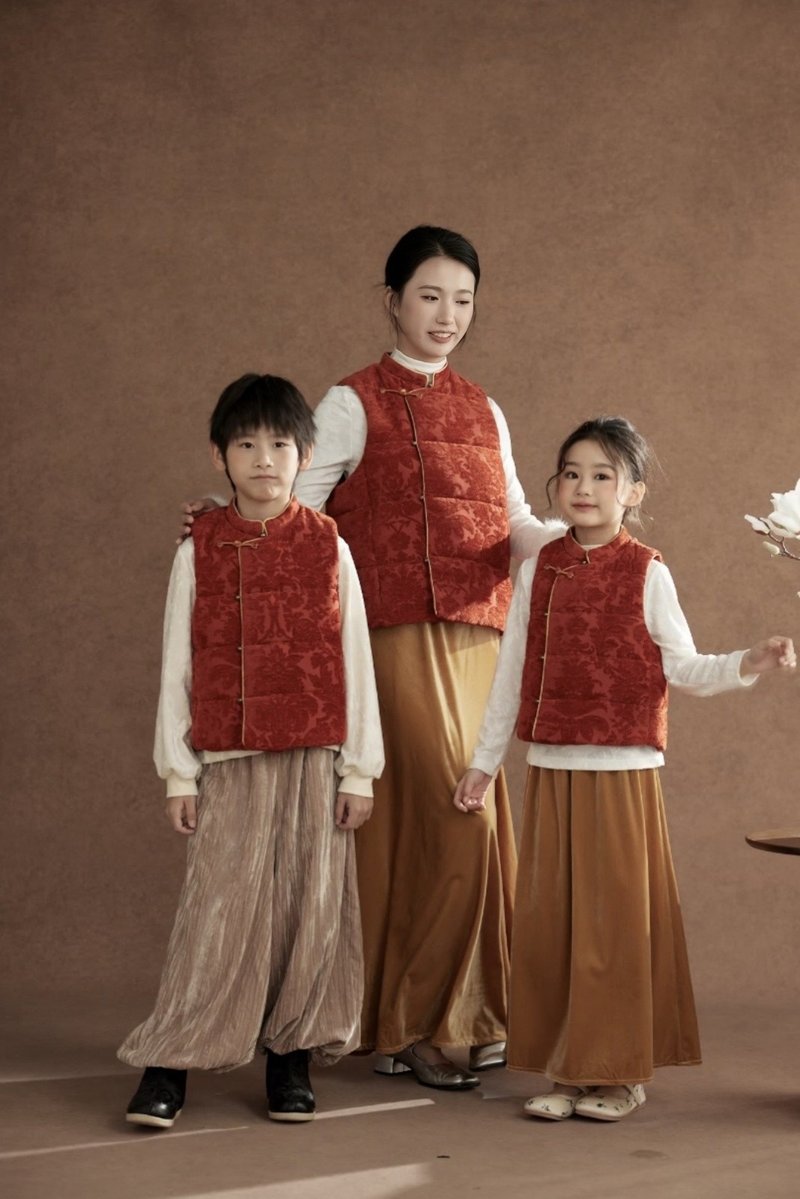
Craft day is glue-and-paint-pen day, so save the formal pieces and keep the festival feeling: a red top with washable trousers does the job. For the actual giving — the visit, the dinner, the photo with the envelope — festive pieces come back out, and red is the natural choice: our Lunar New Year 2027 early guide walks the ordering timeline for February 6.
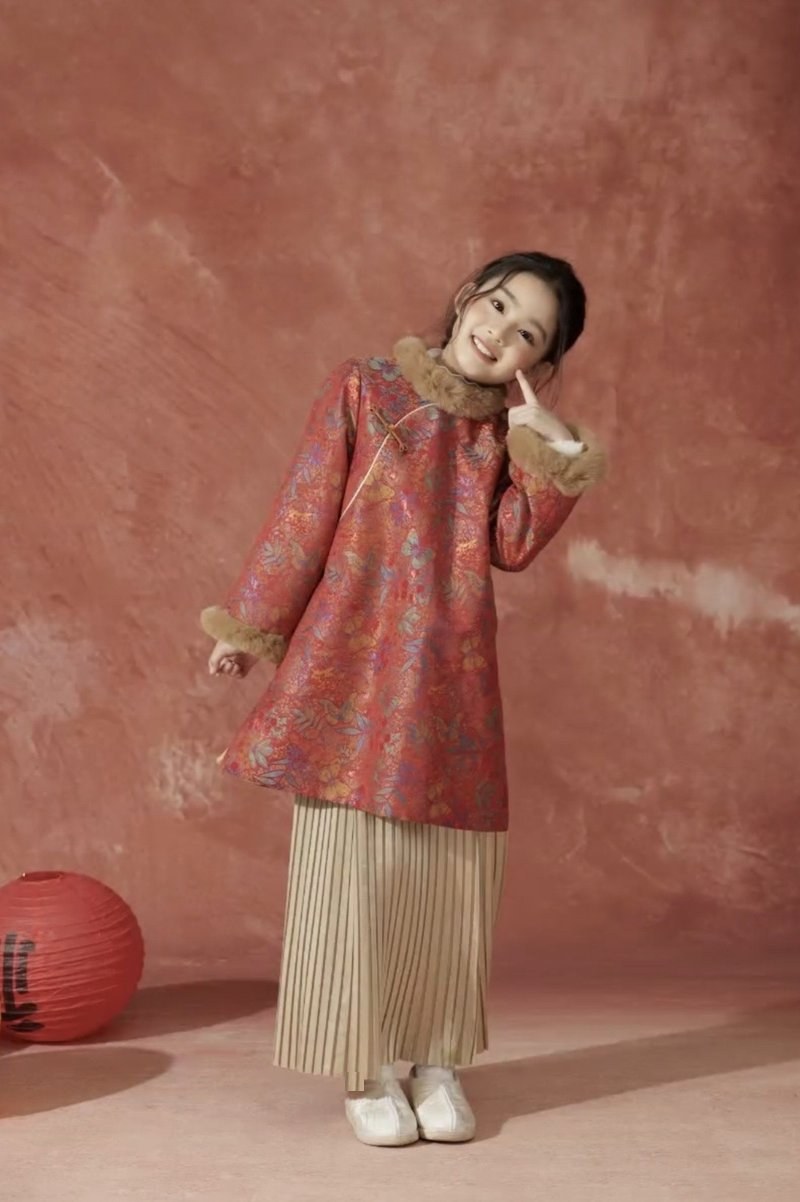
Families planning outfits for several children at once can coordinate from one palette using the family outfit coordination guide; the whole children’s line is browsable on the collection page.
The Practical Three: Washing, Safety, Movement
- Washing — festival outfits worn on craft-and-delivery days machine wash on a delicate cycle in cold to warm water, inside out where there is brocade or velvet, hung to dry. The complete routine is in the wash-and-store guide.
- Safety — for the crafts themselves: age-grade the scissors and skip small decor pieces for under-threes. For the clothing: our children’s line is tested to GB31701-2015 Class A by a CNAS-accredited lab, the children’s clothing safety standard used in China, and the quick button-and-tie pass before a visit is in the toddler safety checklist.
- Movement — delivering envelopes means getting up, bowing, reaching, and post-giving floor time with cousins. Soft waistbands, wide trousers and sleeves with room keep all of that ordinary; kids should never have to be careful in their holiday clothes.
Sizing in Centimeters and US Sizes
| Height (cm) | Approx. US size | Approx. age |
| 100 cm | 3T-4T | 3-4 years |
| 110 cm | 4T-5T | 4-5 years |
| 120 cm | US 6-7 | 6-7 years |
| 130 cm | US 8 | 8 years |
| 140 cm | US 10 | 10 years |
| 150 cm | US 12 | 12 years |
Order by height, allow room for a winter base layer, and when in doubt size up — the kids’ sizing chart explains the fit rule.
Frequently Asked Questions
What age can kids start making red envelopes?
Two, with the coloring version and an adult finishing the folds. From six, most children manage the classic folded envelope start to finish. The felt keepsake version is a good first sewing project at seven or eight.
How much money goes inside a handmade envelope?
Whatever the family decides — the handmade envelope is about the gesture. Coins, a small bill, or a coupon for a privilege all work; many families let children decide their own amount for envelopes they give, which is where the tradition gets interesting.
Do children give red envelopes, or only receive them?
Traditionally elders give to children, but children give too — to parents and grandparents, often as a token amount from their own savings, and crafts make this possible at any age. Receiving-and-giving manners are the same in both directions.
What should kids wear for the envelope-giving visits?
Something festive, red-leaning and comfortable enough for a long evening — see the practical three above, and the CNY dinner outfit guide for the full rundown.
Can we do these crafts outside Lunar New Year?
Yes — red envelope crafts are a common request for school cultural weeks and birthday parties with a Chinese theme. The folding and paper-cut versions work year-round; only the goat-year motifs are seasonal.
[…] account and hand the moment to the child. Some relatives still prefer the paper version — our red envelope crafts guide covers handmade packets, and plenty of families do both, one from each side of the […]