
Ask any adult who grew up with Lunar New Year what the holiday smells like, and the answer is rarely perfume or firecrackers — it is flour and sesame, boiling water and sweet rice. The food is the festival, and the kitchen is where children absorb it: hands floured to the elbows, a grandmother correcting the pleats, one dumpling quietly carrying a lucky surprise. If our reunion dinner guide covered what children do at the table, this guide covers the part that happens before anyone sits down — cooking with kids for Chinese New Year, with the age-by-age jobs, the safety rules and the folklore that make it worth doing properly. Lunar New Year 2027 falls on February 6, which gives your kitchen a full runway.
Why Food Is the Curriculum
Almost every dish served during the fifteen-day festival carries a meaning, and children remember meanings they helped make:
- Dumplings (jiaozi) — shaped like ancient gold ingots, wrapped on New Year’s Eve by the whole family; eating them is a wish for wealth in the new year.
- Tangyuan — glutinous rice balls in sweet soup, round like the full moon; their name sounds like tuanyuan, “reunion,” which is why the south of China serves them at the reunion table and again at the Lantern Festival that closes the season on February 20, 2027.
- Longevity noodles — served on New Year’s Day, deliberately long and deliberately uncut; cutting them short is cutting the wish short.
- Mandarins and a whole fish — the fruit for luck and the fish for abundance (its name sounds like “surplus”), both helpers a child can arrange on a platter without touching a stove.
The full symbolic backdrop is in our fifteen-day traditions guide; here we stay hands-on.
Dumplings: The New Year’s Eve Ritual
Northern China wraps dumplings on New Year’s Eve, often late into the evening, and many families keep a quiet piece of folklore alive: one dumpling hides a clean coin, a peanut or a date, and whoever finds it is said to have an extra-lucky year. Present it as a folktale rather than a promise — kids enjoy the suspense either way.
The process is naturally child-shaped: one adult mixes the dough (plain flour and warm water, rested for thirty minutes), another rolls thin wrappers, and everyone else fills and folds. A teaspoon of filling is the whole secret — new wrappers tear because enthusiastic hands overfill them, so make “small spoon” the house rule and the fold rate climbs immediately. To pleat a simple dumpling: fold the round wrapper in half over the filling, pinch the center to seal, then pleat one side inward toward the middle. Ugly dumplings still cook perfectly; tell the children that the dumpling’s beauty is for the cook’s heart, the seal is for the pot.
Tangyuan: Reunion You Can Roll
Tangyuan are easier than dumplings and better suited to younger children — it is essentially edible play dough. Glutinous rice flour plus warm water makes a smooth white dough; a small ball flattened into a cup, a half-teaspoon of sweet filling (sesame or peanut paste is classic), rolled closed and back into a ball. They are done when they float in gently boiling water, which takes only a few minutes and feels like a small magic trick for a five-year-old. Serve in the warm cooking water with a little rock sugar, or in a light sweet soup.
Age-by-Age Kitchen Jobs
- Ages 2-3 — flour station: pressing dough discs with a palm, dropping filling with help, arranging mandarins. Attention span is short; give one job and a bowl of flour to explore.
- Ages 4-6 — filling and simple folding; rolling tangyuan balls (their small hands are genuinely good at this); taste-testing the soup.
- Ages 7-9 — pleating dumplings properly, rolling wrappers with a small pin, managing the tangyuan rolling station start to finish.
- Ages 10+ — wrapper production line, pot watching with an adult present, and the honor of hiding the lucky dumpling (a job of great solemnity).
Safety Rules Worth Reading Twice
- Adults own the stove. Children fold, roll and shape; boiling and frying stay in grown-up hands, with pot handles turned inward.
- Knives stay adult-side. There is nothing in this menu a child needs to cut; filling goes on by spoon.
- Choking care for tangyuan. Glutinous rice balls are chewy — for children under four, cut tangyuan into halves and supervise eating, the same rule we apply at the Lantern Festival table.
- Label the allergens. Wheat lives in the dumpling wrappers and sesame or peanut in classic tangyuan fillings; for mixed groups, make one rice-flour batch with a fruit or red-bean filling and keep every original package for label checking.
- The lucky coin is cooked, not eaten — use a freshly boiled-and-dried coin (or skip it for a whole peanut), and warn finders not to bite down on the mystery.
A Classroom Version With No Stove
For a school party or a co-op, run a no-cook station: pre-made dumpling wrappers and pre-mixed tangyuan dough, filling applied by spoon, folding practice on paper plates, and every raw item goes home in a labeled bag to be cooked by a parent that evening. It keeps the hands-on joy, removes the heat hazard entirely, and slots into the same seventy-five-minute frame as our other festival stations. Pair it with a red envelope craft table and the party plans itself.
What to Wear While Cooking (and After)
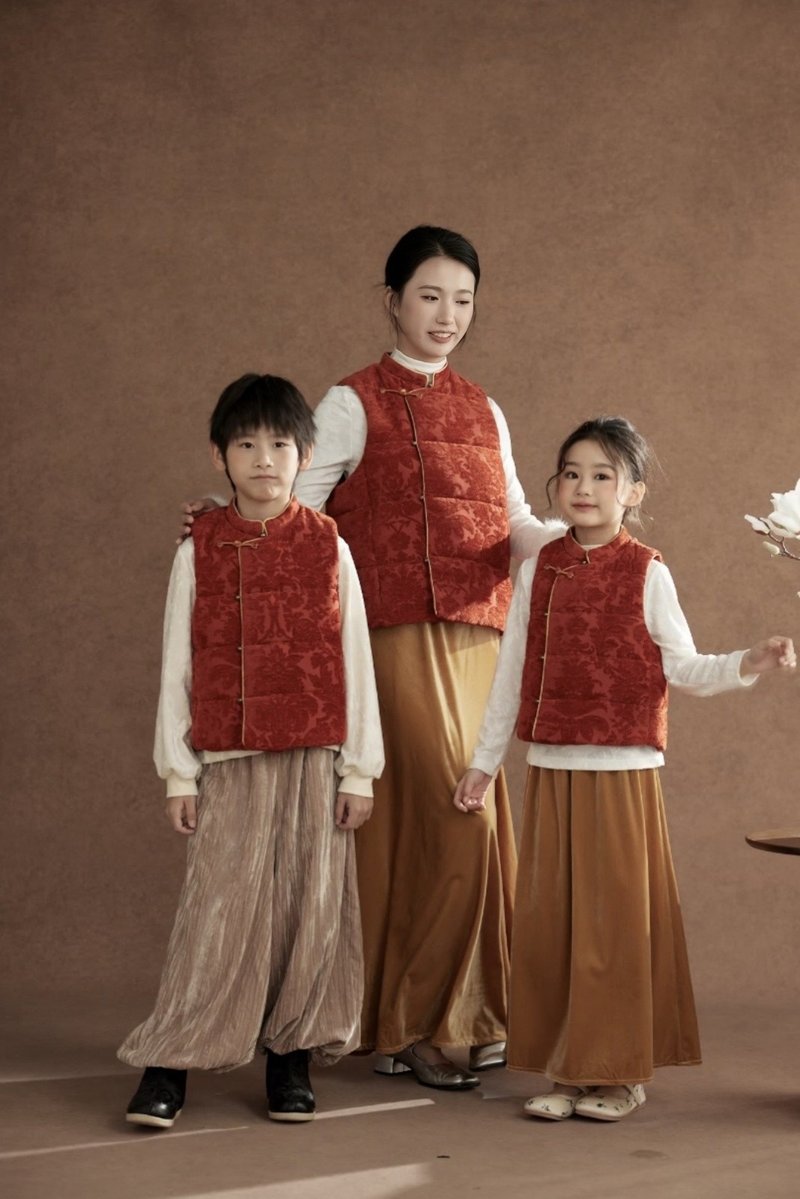
Full flowing sleeves and soup are natural enemies, which is exactly why a fitted layer works: a sleeveless festive vest over a soft long-sleeve tee keeps the holiday look while the apron does the protection. Choose machine-friendly base layers, save the full dinner outfit for the table, and if flour wins the battle, our wash-and-store guide covers the recovery. Families who cook in costume every year tend to keep one designated “kitchen-safe” festive piece — the collection page has sturdy everyday sets that survive both the stove and the school day.
Frequently Asked Questions
Can we make dumplings ahead and freeze them?
Yes — freeze them in a single layer on a tray first so they do not fuse, then bag them; cook straight from frozen without thawing. Wrapping night becomes less stressful if half the batch is already waiting in the freezer.
My child has a wheat allergy — is tangyuan an option?
Usually, yes: tangyuan wrappers are made from glutinous rice flour, not wheat. The filling is the part to check, since some contain wheat-derived thickeners; keep the package label in hand, or fill with mashed red bean or fruit you prepared yourself.
What is a simple New Year’s Day breakfast a child can help with?
Longevity noodles: an adult boils them, and the child’s job is garnish — scattering scallions and arranging the bowl without any cutting, since the noodles must stay long and uncut for the luck to hold.
How do I keep a toddler engaged without flouring the entire kitchen?
Contain the station: one damp towel per child, one small bowl of flour, one job. Toddlers last longer at the tangyuan station than the dumpling station, because rolling balls is repetitive in the way they like, and finished balls can go straight onto a tray they decorate with their fingerprints — flour becomes part of the memory, not the mess.
[…] runs through our other hands-on holiday guides — red envelope crafts for the gifting table and cooking activities for the kitchen — and families who celebrate Christmas too often pair this project with the […]