

Every family has one photo that gets reprinted year after year, and in most Chinese families it is the New Year photo with the grandparents in it. Kids grow, hairstyles change, the sofa gets reupholstered — but the frame of three or four generations squeezed together after the reunion dinner is the one that ends up on the wall and, decades later, in a grandchild’s memory. Lunar New Year 2027 falls on February 6, which means the planning window is now: outfits, timing, and the small logistics that decide whether the photo is a chore or the highlight of the holiday. This guide covers how to build a multigenerational New Year photo that the elders in your family will genuinely enjoy being part of.
Why Grandparents Belong at the Center of the Frame
Western holiday cards tend to arrange the family by height, kids in front. Chinese New Year photos follow a quieter logic: the eldest generation sits or stands at the center, and the generations arrange around them. The photo is a statement of continuity — this is who we come from, and this is who carries it forward. That is also why the New Year photo is the single most-shared image in a Chinese family’s group chat: aunts, uncles and cousins on other continents all want to see that everyone gathered, that grandma looked well, and that the newest child is now tall enough to reach her shoulder.
Practically, this means planning the photo around the elders rather than squeezing them in at the end. Grandparents tire quickly in formal poses, so the photo that works is one taken in the first thirty minutes of the gathering, before the long dinner, when clothes are crisp and everyone’s patience is intact.
When to Take the Photos
There are three natural windows, and each produces a different kind of picture:
- Before the reunion dinner on New Year’s Eve. Everyone is dressed, the table is set, the light is late-afternoon soft. This is the classic full-family portrait window — schedule it explicitly, because once dinner starts, the moment dissolves into eating.
- New Year’s Day visits. When relatives arrive or the family goes to the grandparents’ home, smaller photos happen naturally: the child delivering greetings, the red envelope handover, the tea being poured. Our greetings guide doubles as a photo-moment script — the bow and the two-handed envelope exchange photograph beautifully and mean something.
- The ordinary in-between. Grandpa reading with a grandchild, grandma adjusting a collar, the kids stealing oranges from the fruit plate. Ask whoever holds the camera to keep shooting between poses; in most families, one of these unposed frames becomes the favorite.
Dressing Three Generations Without Going Matching-Mad
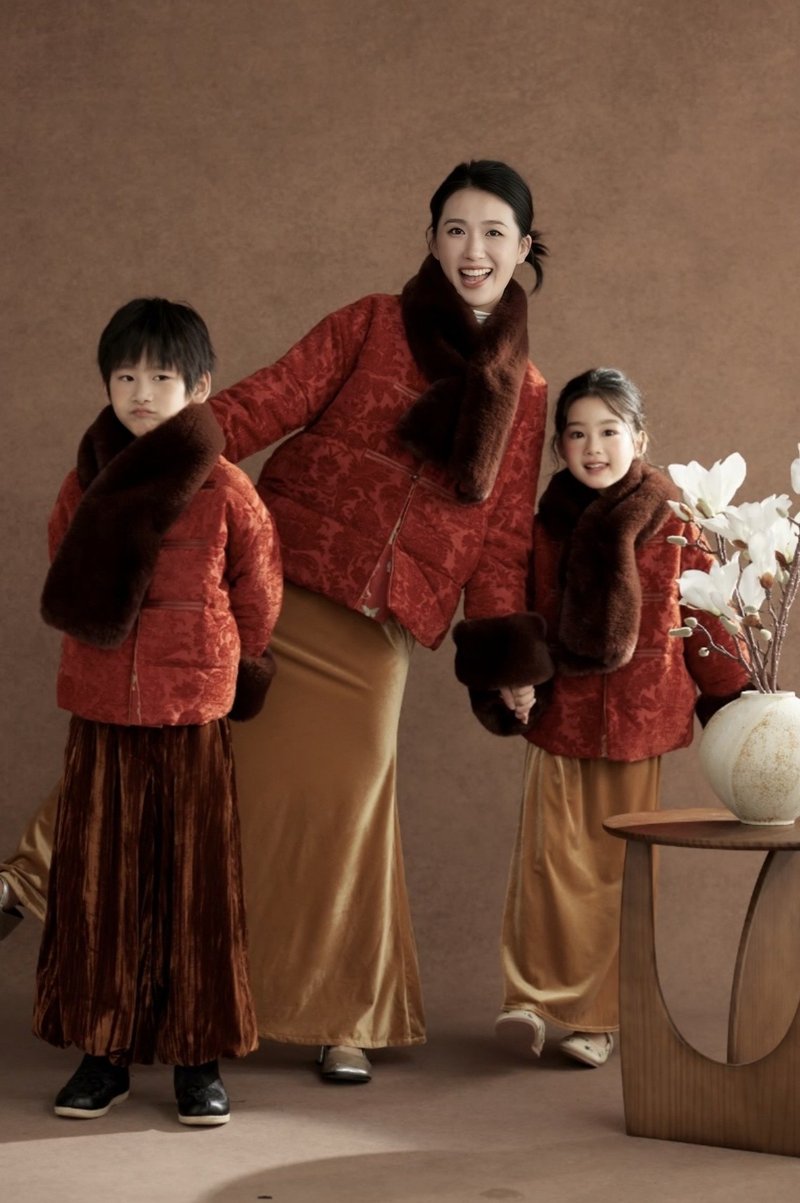
The polished multigenerational photo usually follows one rule: one shared color palette, not one shared costume. Pick two or three colors — red and gold for the festive classics, or a calmer palette of cream, green and rust if the elders find full red too loud — and let each generation interpret it differently. Children can wear the full festive look; adults can wear one strong piece each; grandparents keep their own silhouette and join through color. Our family outfit coordination guide walks through palette-building in detail, and the collection page carries children’s pieces in the shades that coordinate most easily with adult holiday wardrobes.
Two details worth thinking about for the elders specifically:
- Comfort beats ceremony. Grandparents will sit, eat, pour tea and be hugged constantly. Soft knits or a favorite jacket in the family palette photograph better than anything stiff, and a grandmother who feels like herself smiles like herself.
- Textures help. Velvet, brocade and knits read richly in photos and flatter every age — a brocade vest over a plain top is the easiest festive upgrade for an elder who “doesn’t do costumes.”
Children’s pieces should pass the same practical test: they will be picked up, sat on laps and fed snacks in these photos. Pieces with soft waists and washable fabric survive the session — the layering guide covers how to keep a festive look warm and seated-friendly for a long evening.
Poses and Moments Elders Actually Enjoy
The stiffest multigenerational photos come from poses designed for weddings. What works better is giving each generation something to do:
- The seated center. Seat the eldest (or the eldest couple) in sturdy chairs at the center, generations fanning around. If a great-grandparent is present, everyone else stands — the photo organizes itself around them.
- The tea or the tangerines. A child offering tea, or passing a plate of oranges — the word for tangerine sounds like “luck” in Cantonese and gold in Mandarin, and the gesture gives hands something graceful to hold.
- The hongbao handover. The two-handed receiving bow from our greetings guide, captured mid-motion, is the single most requested shot in most families.
- Hands and shoulders. A close frame of the eldest hands holding a child’s smaller ones, or grandma’s hand on a shoulder, carries the whole meaning of the holiday in one image — and it is a pose no one has to hold for long.
Making Elders Comfortable in Front of the Camera
Many grandparents of a certain generation associate cameras with formal occasions and freeze accordingly. Three things consistently help: keep the first shots candid so nobody feels watched; tell the elders their role explicitly (“you sit, you smile, we arrange around you” — a job, not a performance); and cap the formal session at ten minutes. If a grandparent waves the camera away, respect it and take the candid version — the goal is a photo the whole family likes, not a photo one person endured.
When Grandparents Are Far Away
For diaspora families the reunion happens on a screen, and the photos can still happen. Two approaches work well. First, schedule the video call during the good light and take screenshots during natural moments — the greeting, the envelope arriving, the child showing off an outfit; our digital red envelope guide covers the call etiquette so the screenshots capture genuine moments. Second, take the “empty chair” version: a full family photo at home, printed and carried to the grandparents on the next visit, or mailed inside a handmade packet from our red envelope crafts guide. Grandparents screenshot these; the sentiment travels both directions.
Practical Notes Before the Shoot
- Wash early, wear fresh. Wash children’s outfits two or three days ahead, hang-dry, and skip the last-minute ironing panic — full care instructions live in the wash-and-store guide.
- Safety once-over. Before the session, run the quick check from our toddler safety checklist — no loose ties at the neck, hems clear of toddler footsteps, and nothing dangling that a seated great-grandparent’s bracelet could catch.
- Movement stays in the outfit. Kids who can crouch, climb onto a chair and be lifted without wardrobe drama hold poses longer; elastic waists and soft shoulders earn their place in photo outfits by the second hour.
- Size up by height. Order by centimeters, not by hope — the cm sizing chart maps every height to a US size.
What Happens to the Photos Afterward
The New Year photo has afterlives: it becomes next year’s New Year card, the wallpaper in the grandparents’ phone, the image relatives forward with “look how much she’s grown.” Print at least a handful. A small album handed to the grandparents on the second visit day is, by the accounting of most grandmothers, a gift of the highest denomination.
Frequently Asked Questions
What should grandparents wear if they refuse anything “costume-like”?
Work through color and texture instead of silhouette: a knit or jacket in the family palette, or a single brocade piece layered over what they already own. The photo coheres through the palette, not through matching outfits, so elders never need to leave their comfort zone to belong in the frame.
What is the best time of day for indoor New Year photos?
Late afternoon before dinner, when window light is soft and warm, or early evening with lamps on and overhead lights off — the mixed light of “some lamps, some daylight” flattens skin tones. Whatever you do, take the formal portrait before the meal; after-dinner group photos are for memories, not for walls.
How do we include a great-grandparent who cannot stand?
Seat them in the center with a sturdy armrest, build the generations around them, and keep the floor visible rather than stacking people behind chairs. The centered seated elder is not a compromise — it is the traditional arrangement, and it reads as the respect it is.
Can we take the photos outdoors?
Absolutely — courtyard gates, temple fairs, blossom branches and lantern strings all make vivid backdrops, and red outfits photograph brilliantly against grey winter streets. Keep the formal multigenerational frame indoors or at golden hour; midday outdoor light is the least flattering for elder portraits.
How early should we plan outfits for a February 6 New Year?
Four to six weeks ahead is comfortable: children’s pieces ship worldwide and popular sizes run thin in the final fortnight before the holiday. Choose the family palette first, order the children’s looks, then let the adults and grandparents work backward from there.
What if the grandparents live in China and we are sending photos digitally?
Send the handful of selects, not the whole camera roll — elders scroll slowly and savor, and five excellent images get more love than fifty. A short video of the child delivering their greeting, fifteen to thirty seconds, lands even better than stills on the family call.
[…] soft green beside grandparents and cousins in reds creates depth without breaking harmony — the multigenerational photo guide covers exactly that […]