
Of all the meals a family shares in a year, the reunion dinner — nianyefan, the New Year’s Eve dinner — is the one Chinese families plan around. Relatives travel across the country for it, the menu is decided days in advance, and children have real jobs at the table: greetings to deliver, elders to serve, dishes whose names are small blessings. For families celebrating Lunar New Year 2027 (February 6) outside China, the reunion dinner is also the most kid-visible tradition of the whole festival — and the easiest one to prepare children for in advance.
This guide explains what actually happens at a reunion dinner and what children are expected to do: the greetings, the seating, the dishes and their meanings, toast etiquette children can manage, red envelope timing, and the games that keep younger kids happy at a long table. We close with the practical questions — what kids wear, washing, safety, movement and sizing. (If you are here for the clothing side only, our CNY dinner outfit guide covers that in depth.)
What the Reunion Dinner Is
The reunion dinner is the meal that opens Lunar New Year, eaten on New Year’s Eve with the aim of having every generation at one table. The word that matters is tuanyuan — reunion, roundness, completeness. In China, it is routinely called the largest annual human migration’s destination event: trains and planes fill for weeks beforehand precisely so families can be together for this one dinner. For bicultural families abroad, the dinner usually lands on a school night or a work night, which is worth planning for — an early seating with the same dishes keeps the tradition intact even when midnight is not an option.
Children are not guests at this meal; they are participants. That is the part many families new to the tradition appreciate most: a five-year-old with a small job at the table is doing exactly what children have done at this dinner for generations.
Kids’ Jobs at the Table
- The greetings come first. Before anyone sits down, children greet the eldest relatives by name with a new-year wish. A handful of phrases is enough, and our CNY greetings guide for kids gives five age-appropriate ones with pronunciation and a two-week practice plan.
- Elders are seated first, and served first. The seat facing the door traditionally belongs to the most senior family member. Children learn by doing: showing grandma to her chair, or handing her the serving spoon first, is the etiquette lesson itself.
- Waiting, then eating together. The meal starts when everyone is at the table — a natural first course in patience. Younger children get a small plate of fruit to bridge the wait.
The Dishes and What They Mean
Reunion dinner menus are built on wordplay — dishes whose names sound like wishes for the year ahead. Children love learning these, because every dish becomes a tiny riddle:
- Fish (yu) sounds like the word for surplus — served whole, often with some deliberately left over, so the year “ends with abundance carried forward”.
- Dumplings are the northern tradition: folded like old-style gold ingots, and in many families the children help wrap a batch in the afternoon — an activity, not just a food.
- Nian gao, the sweet sticky rice cake, sounds like “year high” — the wish that the new year raises everyone up, kids’ height included.
- Longevity noodles are served uncut, because a long noodle means a long life; teaching a child to slurp one respectfully is its own small ceremony.
- Mandarin oranges are brought as gifts and set out in bowls, their name sounding like luck and gold.
None of this is superstition to enforce — it is folklore, and presenting it that way (“this dish is a pun for good luck”) gives children the fun of the wordplay without turning dinner into a test. Families mix and match freely; the constant is simply everyone being at the table.
Toasting Etiquette Children Can Actually Manage
Toasts at a Chinese family table are simple and repetitive, which makes them perfect for kids. The child holds their cup — tea or juice, never assume wine — with both hands, offers it slightly lower than the elder’s glass as a sign of respect, says their greeting, and takes a small sip. That is the whole mechanic, and it repeats table-wide, which means children get a dozen low-stakes practice rounds in one evening. A child who toasts each grandparent properly will be remembered for it all year.
Red Envelopes: Timing and Manners
For most families, red envelopes (hongbao) arrive after the meal or during the visits that follow it — not at the moment of sitting down. The manners are teachable in one sentence: receive with both hands, say thank you and the greeting, and do not tear the envelope open at the table. That last rule is the hardest for a six-year-old, so agree on it in advance — “we open them at home, and you keep the envelope” turns the delay into a ritual rather than a prohibition. The full receive-and-thank sequence, including the little bow, is in our greetings guide.
Keeping Kids Happy Through a Long Table Evening
A reunion dinner runs long — two or three hours is normal — so experienced families build in a few kid-scale activities:
- Wrapping duty. Children who folded dumplings or helped plate oranges before dinner arrive at the table as contributors, not spectators.
- Riddle round. Simple lantern riddles written on paper slips, one per child, read aloud between courses; small stickers or coins make fine prizes.
- The zodiac question. 2027 is the Year of the Goat, and children born in goat years are the dinner’s natural celebrities — our Year of the Goat kids’ guide supplies the story, and the zodiac guessing game (“who at this table shares your animal?”) fills a whole course.
- Post-dinner light show. After the table clears, kids get the sparkler-free jobs: hanging the last lanterns, handing out the oranges, arranging the candy tray.
Families who want the whole festival mapped out — from the pre-dinner cleaning sweep to the lantern festival finale on February 20 — will find the full fifteen-day sequence in our CNY traditions guide for kids.
What Kids Wear to the Reunion Dinner
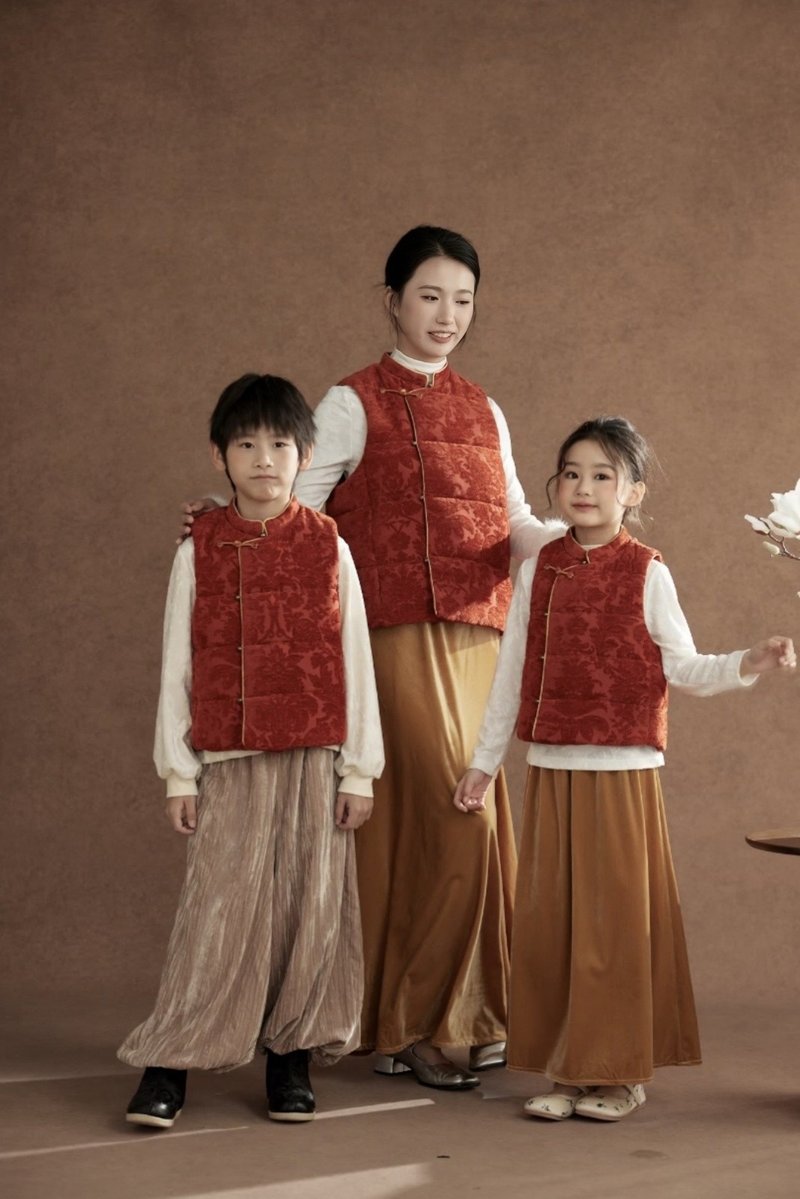
The reunion dinner is the most photographed event of the festival, which is why the tradition of wearing something new for the new year lands here. Red is the customary choice — the story of why Chinese kids wear red is a favorite with children themselves — and our Lunar New Year 2027 early guide walks the February 6 timeline for ordering.
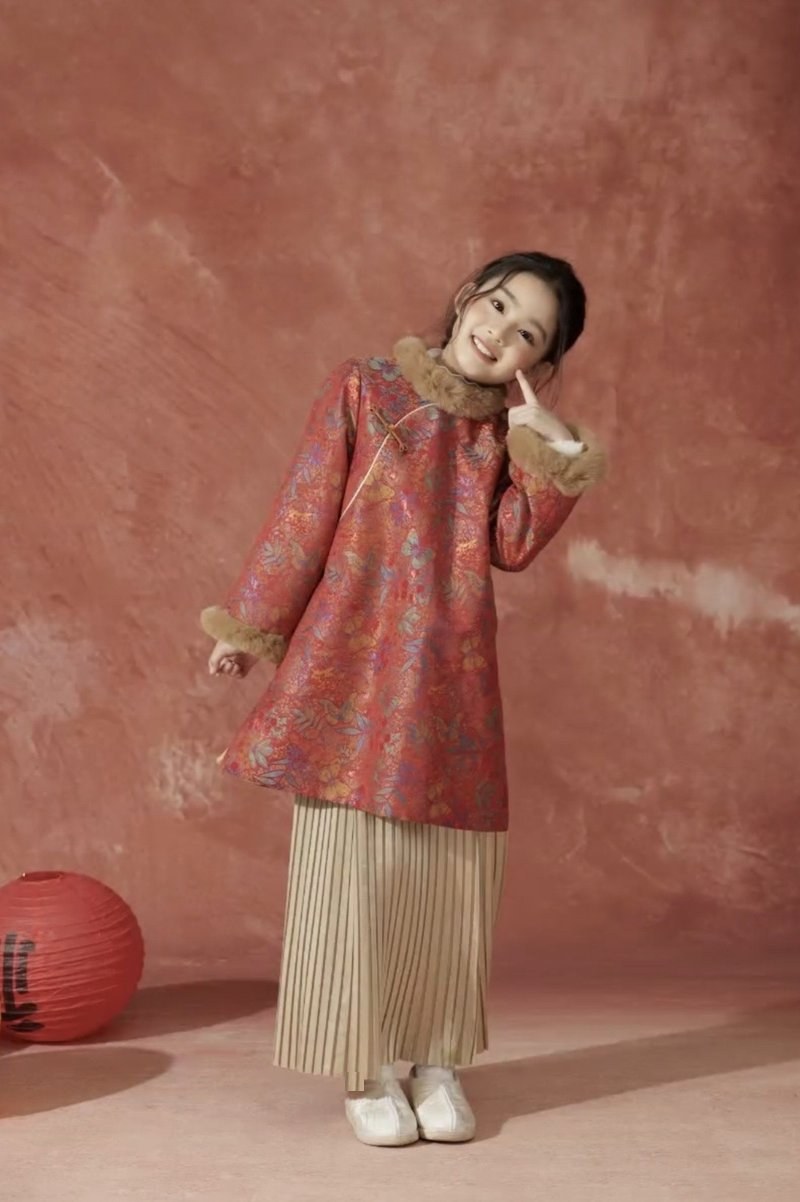
Families coordinating several generations from one palette should start with the family outfit coordination guide.
Comfort decides the evening’s success more than formality does. A long dinner means sitting, reaching, second helpings and post-meal floor time with cousins; outfits with elastic-backed waists, wide trousers and soft collars survive all four. Our boys’ gold bamboo-leaf padded coat and velvet lantern pants set is built on exactly that formula — dressed-up top, move-everything bottom.
The Practical Three: Washing, Safety, Movement
- Washing — most children’s holiday pieces machine wash on a delicate cycle in cold to warm water, inside out where there is brocade or velvet, hung to dry. The complete routine lives in the wash-and-store guide; wash the dinner outfit a few days before, not the morning of.
- Safety — our children’s line is tested to GB31701-2015 Class A by a CNAS-accredited lab, the children’s clothing safety standard used in China. Before a long dinner, run the quick pass over knot buttons and ties from our toddler safety checklist.
- Movement — the dinner-plus-games evening demands reach and floor time. Wide lantern trousers, soft waistbands and sleeves with room are standard across our children’s line, so kids can do every job at the table without a costume change.
Sizing in Centimeters and US Sizes
| Height (cm) | Approx. US size | Approx. age |
| 100 cm | 3T-4T | 3-4 years |
| 110 cm | 4T-5T | 4-5 years |
| 120 cm | US 6-7 | 6-7 years |
| 130 cm | US 8 | 8 years |
| 140 cm | US 10 | 10 years |
| 150 cm | US 12 | 12 years |
Order by height, allow room for a winter base layer, and when in doubt size up — the kids’ sizing chart explains the fit rule. Adult pieces are sized by the wearer’s height, confirmed before shipping.
Frequently Asked Questions
What time is the reunion dinner eaten?
Traditionally the evening of Lunar New Year’s Eve — February 6, 2027 for the coming year — but the date matters less than the table being full. Families abroad often hold an early seating the same evening, or the nearest weekend, with the same dishes and rituals.
What do children say at the dinner table?
One greeting per elder is plenty: their name plus a wish such as “happy new year” or “good health”. The greetings guide has five ready-to-practice phrases with pronunciation.
When do kids get their red envelopes?
Usually after dinner or during visits in the days that follow. Receive with two hands, thank the giver, and save the opening for home — a rule worth rehearsing once before the evening.
How long should children stay at the table?
Through the toasts and the main courses is a reasonable goal; after that, a kids’ corner with the riddle slips and oranges keeps the evening pleasant for everyone. The dinner should be remembered fondly, not endured.
What should kids wear to the reunion dinner?
Something new-feeling, festive and comfortable — see the practical three above and our full dinner outfit guide. The whole children’s line is browsable on our collection page.
[…] being loud, and the panda story gives children a conversation starter at a table of relatives; our reunion dinner guide for kids covers what children actually do at that […]
[…] elbows, a grandmother correcting the pleats, one dumpling quietly carrying a lucky surprise. If our reunion dinner guide covered what children do at the table, this guide covers the part that happens before anyone sits […]