

School Cultural Day Is Coming — and Someone Has to Pick the Outfit
Every autumn, teachers send home the same note: next Friday is International Week, and your child is invited to share a culture they love. For families with a connection to Chinese heritage, that usually means one of two feelings — genuine excitement, or quiet panic the night before, when the only option in the closet is a polyester “geisha-adjacent” costume ordered at midnight.
This guide is written for both audiences at once: the parents who need an outfit that survives a school day, and the teachers who want something authentic enough to anchor a real conversation about culture, not a caricature. Modern everyday hanfu sits exactly in that gap — and it is far easier to wear, wash and size than most parents expect.
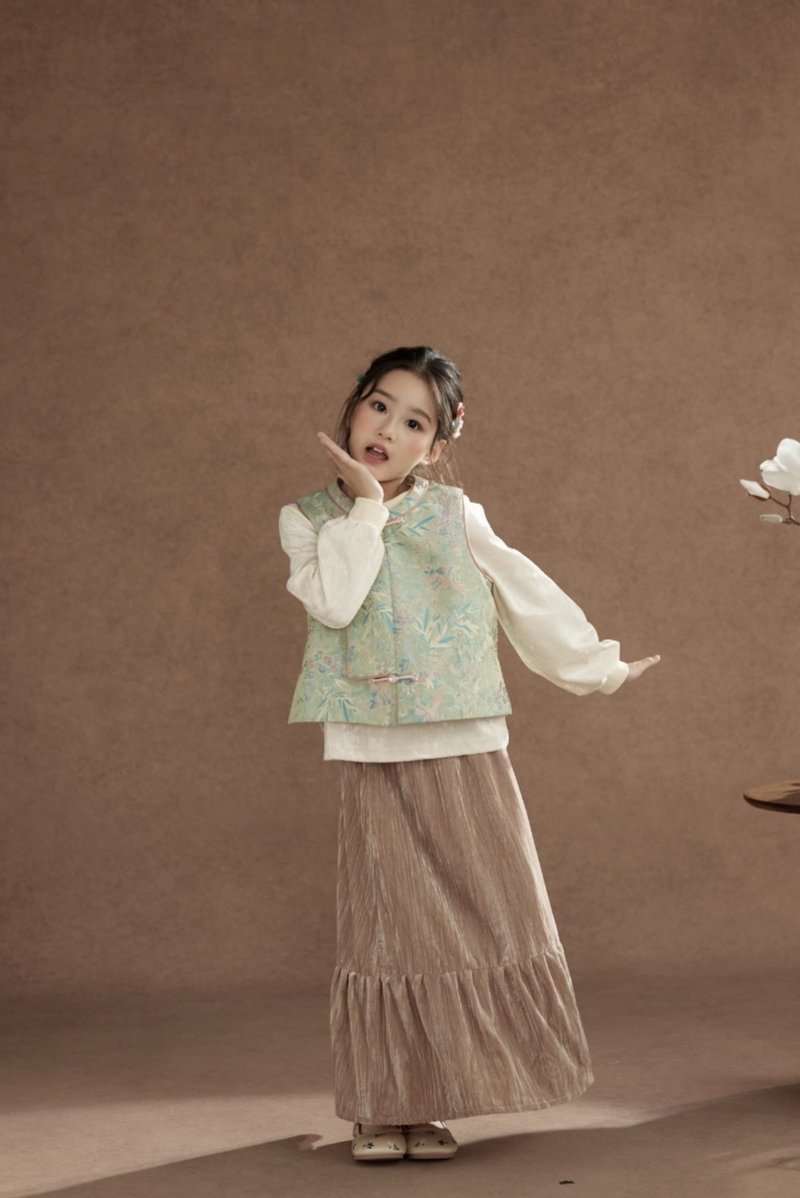
A three-piece vest, shirt and skirt set — classroom-friendly layers a child can put on over their own clothes.
First, a Quick Vocabulary Check for Teachers
When a child walks in wearing crossed collars and a pleated long skirt, classmates will ask what it is. Here is the short version a teacher can use:
- Hanfu is the historical clothing of the Han Chinese people — crossed collars, wrapped fronts, sashes and long skirts or wide sleeves. It comes in many dynastic styles, and the modern “everyday hanfu” movement re-cuts those silhouettes in washable, hard-wearing fabrics.
- Qipao (cheongsam) is a fitted, high-collared one-piece dress that became popular in 1920s Shanghai.
- Tang suit (tangzhuang) is a front-opening jacket with a mandarin collar and frog buttons, often in festive reds and golds.
All three are respectful choices for a cultural day, but they are different garments with different stories. If your class is doing a “history of Chinese clothing” corner, we have a full parent-friendly comparison — Hanfu vs Qipao vs Tang Suit for Kids — that lays out the differences in one table.
What Makes a Good International Week Outfit (From a Teacher’s Desk)
Teachers are not looking for a museum reproduction. Based on what actually works in a classroom, a good cultural-day outfit has four properties:
- Authentic detail worth talking about. A mandarin collar, a crossed lapel, a horse-face pleat — real elements a child can point to and explain.
- Full range of motion. Kids will sit cross-legged on a rug, raise a hand, run at recess. Tight sleeves and floor-length hems cause problems by 10 a.m.
- Layers, not costumes. A vest or jacket over a regular outfit reads as “real clothing the child chose”, which lands better than a one-piece performance costume.
- Something to say. A print with a story — bamboo, pandas, ink-wash landscapes — gives the child a natural script for their presentation.
Everyday hanfu is designed around exactly these constraints. The fabric is cotton and washable silk-blend rather than stiff brocade, and the silhouettes keep the heritage lines — mandarin collar, horse-face pleat, crossed lapel — while re-cutting them for children who climb, spill and hug.
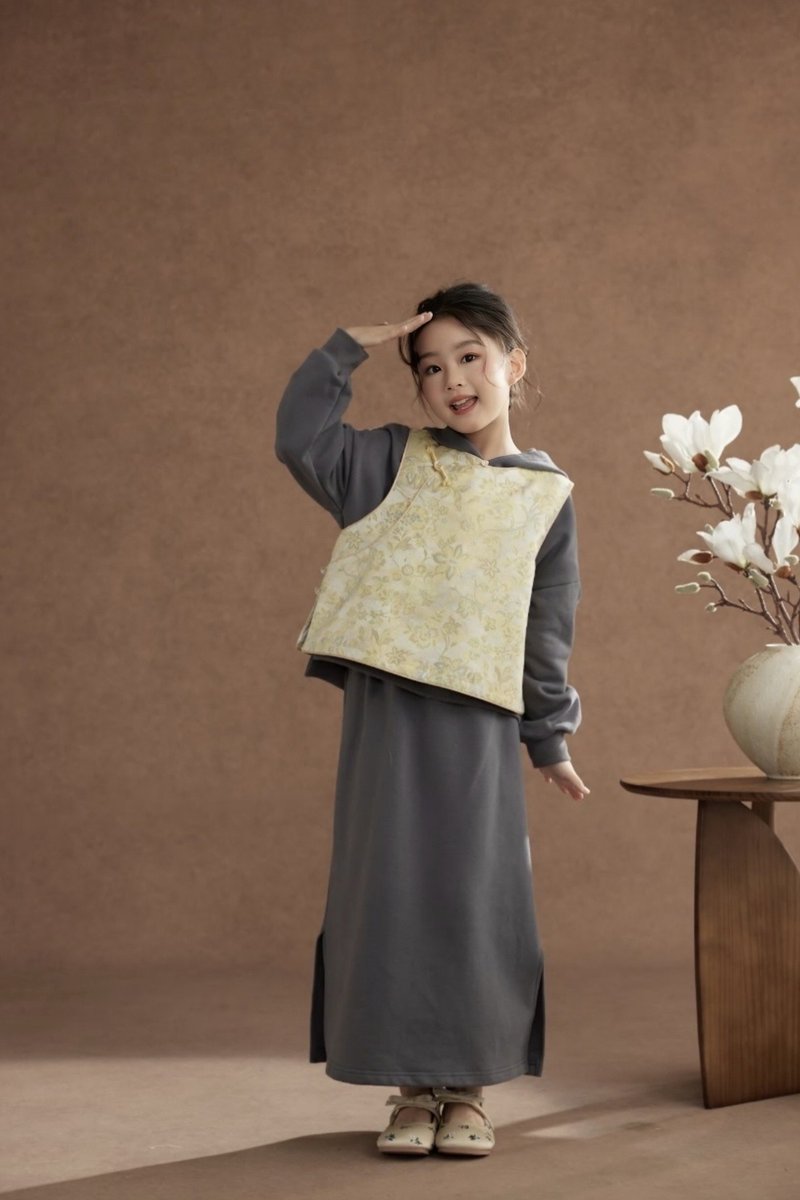
A jacquard vest layered over a hooded sweatshirt: heritage pattern, playground-proof construction.
Three Outfit Recipes by Grade Level
Lower elementary (ages 5–8): the layered vest set
A quilted or jacquard vest over a simple top, with a long skirt or soft trousers underneath, is the most forgiving formula. Nothing drags, nothing unravels, and if the vest is printed — say, an ink-bamboo panda motif — the child has an instant talking point: “bamboo means quick learning in Chinese art.” Three-piece vest sets like the bamboo-blossom one above are built for exactly this kind of day.
Upper elementary (ages 8–11): the pleated skirt or lantern trousers
Older kids can carry a stronger silhouette. A mamianqun — the horse-face skirt with flat panels and deep pleats — photographs beautifully and has a great story for a presentation; our guide What Is a Mamianqun? explains the name and how the children’s version differs. For boys, front-open tang jackets with velvet lantern trousers pair tradition with a cut that does not restrict running.
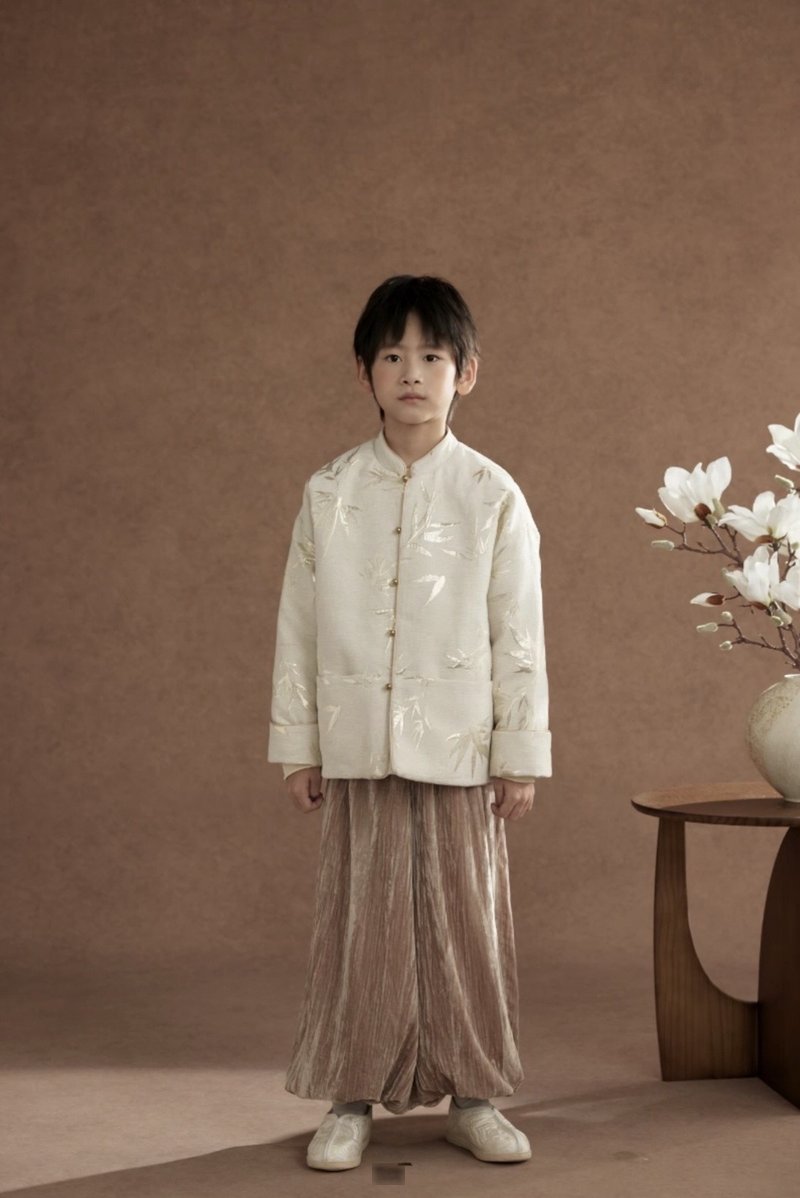
Gold bamboo-leaf jacquard front-open jacket with velvet lantern trousers — a boys’ three-piece with real presence.
Middle school (ages 11+): the modern hybrid
Self-consciousness peaks around this age. Sweatshirt sets with hanfu prints and brocade-sleeve details let students say “this is Chinese design” without feeling like they are on stage. We wrote a whole piece on AW2026 sweatshirt sets as modern hanfu streetwear — it is the most common choice for international-week photos we see from families.
Checklist: Safety, Washing and Movement (the Three Questions Every Parent Asks)
Is it safe for a full school day?
Little Hanfu children’s garments are lab-tested to China’s GB 31701-2015 children’s clothing safety standard, Class A — the strictest class in that standard, intended for direct skin contact of infants and children. Small parts follow the standard’s attachment requirements, and closures are primarily frog buttons and sashes rather than small snap hardware. A fuller breakdown — including the choking-hazard reasoning on buttons and cords — is in our toddler safety checklist.
Can it go in the washing machine?
Yes — that is the point of the everyday line. Cotton and washable silk-blend fabrics are cut and pre-tested for machine washing on a gentle cycle; the everyday sets are made to be worn weekly, not kept in tissue paper. Full care instructions, drying and storage tips are in How to Wash and Store Kids’ Hanfu. For a one-day school event, wash it the weekend before and it will be ready with zero fuss.
Can my child actually move in it?
That depends on the cut, not the culture. Everyday hanfu uses elastic-backed waists or generous sash ties, wide-leg or lantern trousers instead of tight sleeves, and hem lengths cut above the ankle for children’s sizes. A child wearing the layered sets above can sit on a classroom rug, take part in PE-style games, and take the stairs two at a time — we would not build the whole brand around “clothes kids can play in” otherwise.
Sizing: Reading a Chinese Size Chart in US Terms
Hanfu for children is sized by height in centimeters, not by age. Use the chart below to translate — and when in doubt between two sizes, size up; sashes and elastic waists absorb the extra room.
| Height (cm) | Approx. US size | Approx. age |
|---|---|---|
| 100 cm | 3T–4T | 3–4 years |
| 110 cm | 4T–5T | 4–5 years |
| 120 cm | 6–7 | 6–7 years |
| 130 cm | 8 | 8–9 years |
| 140 cm | 10 | 9–10 years |
| 150 cm | 12 | 11–12 years |
Measure your child’s height before ordering rather than guessing from age — growth spurts make age-based guessing unreliable. More detail on the “size up” rule lives in our full sizing guide with the cm chart.
A Note on Respectful Presentation
Hanfu is living heritage, not a costume from a distant land — and international week works best when it is framed that way. Encourage your child to present the clothing the way a friend from China might: here is what the crossed collar means, here is why the skirt has that pleat structure, here is what I like about it. Avoid anything performed as a caricature — the goal is a child sharing something they genuinely wear and enjoy. Modern hanfu is a real daily-wear movement in China right now, which is a much more interesting story for classmates than “people used to dress like this long ago.”
Frequently Asked Questions
Is it appropriate for a non-Chinese child to wear hanfu on cultural day?
Approached with a learning mindset, yes. Hanfu enthusiasts worldwide — including many schools with no Chinese heritage at all — wear it as an act of cultural appreciation. Pair the outfit with a short, sincere explanation rather than a persona, and the gesture reads the way it should.
What shoes and hair work with hanfu for school?
Plain sneakers or flats are completely acceptable for the modern everyday cuts — this is not an era-accuracy hobby. A simple low bun or a braid with a ribbon finishes the look without a costume-shop wig.
How far in advance should we order?
Order at least three to five weeks before the event: made-to-order pieces need that production window, and standard shipped sets also travel internationally. If the event is close, the evergreen sets currently in stock on the collection page are the fastest route.
What if the school asked for “a costume from any country”?
Everyday hanfu still fits the brief — it simply arrives with more substance. Add one prop with meaning (a paper-cut bookmark, a calligraphy brush) and the presentation writes itself.
Can teachers order for the whole class?
Yes — Little Hanfu runs a wholesale program with low minimums for schools, studios and retailers; see the wholesale and partnership page or read how wholesale MOQ and sample orders work.
The least stressful cultural day is the one where the outfit is already washed, already sized, and already loved. That is the idea behind Little Hanfu — modern hanfu, made small, for real kids.