

If you have ever browsed photos of Lunar New Year celebrations, you have noticed it: children everywhere, dressed head to toe in red. A red dress at grandma’s house, a red padded jacket at the temple fair, red socks that peek out above little shoes. For families outside China, this can look like a uniform — but it is really a language. This guide explains why red matters at Chinese New Year, where the tradition comes from, and how to dress your own child in red for the festival in a way that feels natural and respectful.
A Color With a Job To Do
In Chinese culture, red is not simply a favorite color. It is a color with a job. It stands for joy, vitality, good fortune and renewal, which is why it shows up at every major life celebration: births, birthdays, weddings and, above all, the Lunar New Year. Streets are hung with red lanterns, doorways are pasted with red couplets, and children receive red envelopes — hongbao — filled with money from grandparents and relatives.
The tradition is old. Red has been associated with celebration and protection in China for well over a thousand years, and the pigment itself was long among the most vivid and durable dyes available, which helped it become the color of important occasions. By the Ming dynasty, dressing in red for festivals was firmly established custom, and the association has only strengthened since. When a Chinese family dresses a child in red at New Year, they are participating in a continuity that stretches back centuries.
There is also a practical, emotional layer: New Year is about starting fresh. New clothes in an auspicious color mark the fresh start visibly. Many families specifically buy children something new to wear during the festival week — a tradition called chuan xinyi, “wearing new clothes” — and red is the most popular choice for it.
The Story of Nian: Where “Wear Red” Became a Rule
Ask a Chinese child why everyone wears red, and you will likely hear about a creature called Nian. According to a well-known folktale, Nian was a beast that descended from the mountains on the eve of the new year to frighten villagers. The villagers learned that Nian feared three things: the color red, bright light and loud noise. So they painted their doorways red, lit lanterns and set off firecrackers — and the beast stayed away.
Folklorists treat this as an origin story rather than documented history, and you should too. But the story explains why the custom has such staying power. Wearing red is not just decoration; it is a small act of protection, a way for parents to symbolically shield their children as the old year closes. When you understand that, the sea of red at New Year stops looking like a costume code and starts looking like what it is: a shared wish for the youngest members of the family to enter the new year safe and lucky.
What Red Communicates at New Year — and What It Does Not
One nuance worth knowing before you dress your child in red: context matters. Red at New Year means celebration for everyone. Red at a wedding, however, traditionally belongs to the couple — a young guest in brilliant red can inadvertently compete with the bride, which is why we recommend softer tones for wedding guests in our Chinese wedding guest guide for kids. New Year is the opposite: there is no such thing as too much red. The whole season belongs to the color.
How Much Red? Three Ways Families Wear It
There is no single “correct” level of red. Chinese families actually range across a spectrum, and any point on it is authentic:
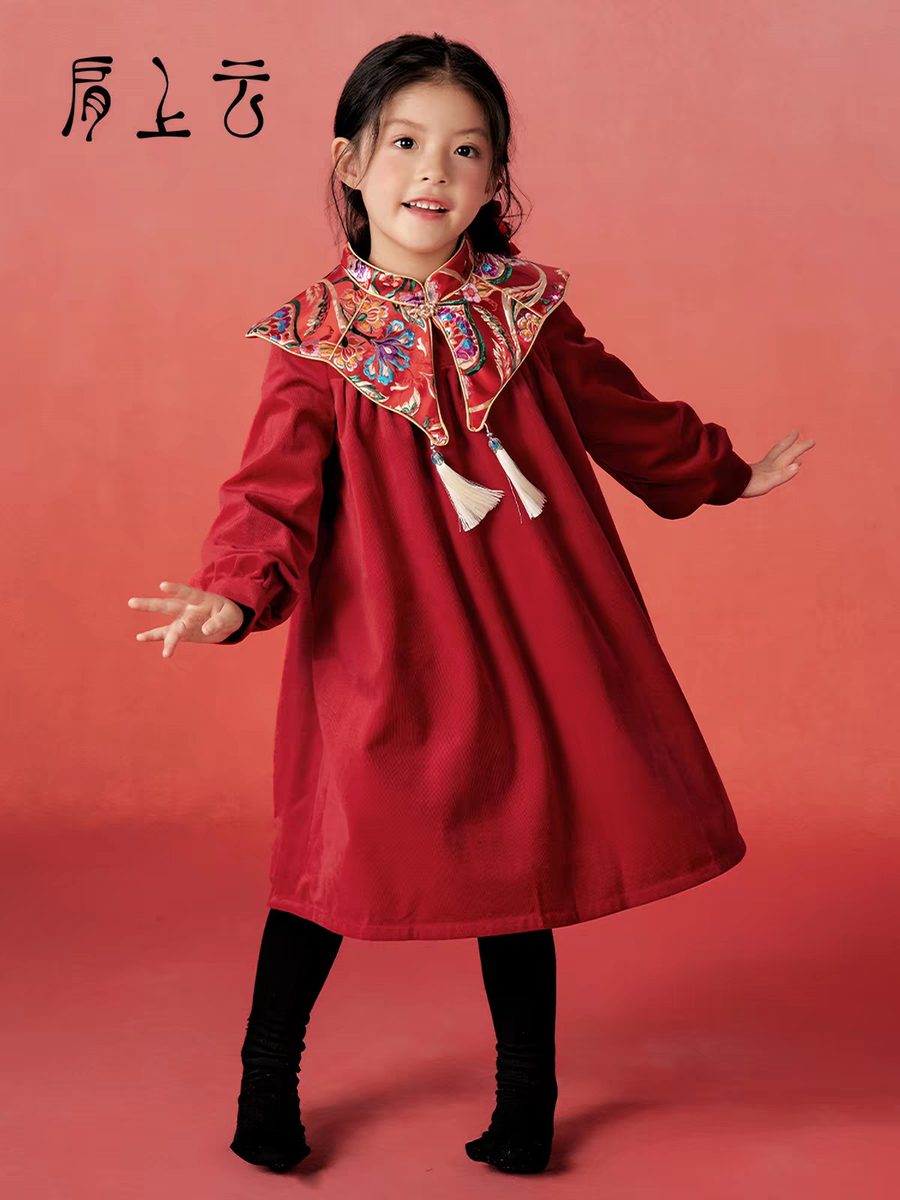
- Full festive: a red dress or a red two-piece set, worn for New Year’s Eve dinner, the first days of the festival, or family photos. This is what most people picture.
- Red as the headline: a red statement piece — a brocade tunic, a padded jacket — over quieter bottoms. Very common for school-age kids who want to run and play without fuss.
- Red as an accent: a neutral outfit lifted by red details: red embroidery, a red hair tie, red socks. Grandparents often complete this picture with a red envelope in the child’s pocket.
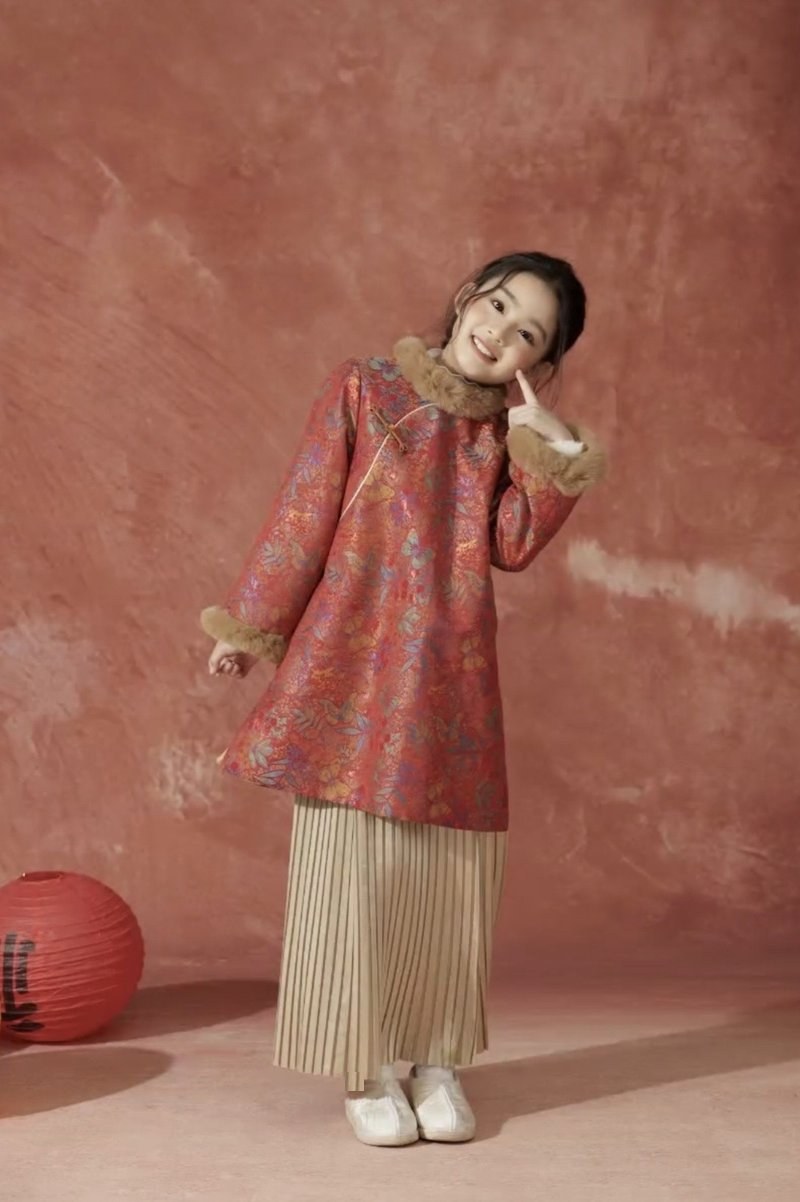
The second approach is a favorite for good reason. A brocade tunic in red and gold reads unmistakably festive in photos, but paired with a pleated skirt or simple pants it stays comfortable enough for a child to eat, run and nap in. If you are building a winter holiday outfit plan, our winter holiday family outfit roadmap shows how one red piece can carry a child from Christmas portraits through to Lunar New Year week.
Choosing a Red Outfit for Your Child
Once you have decided on the amount of red, three practical questions decide everything else.
Can it be machine washed?
Festival weeks are messy — dumpling fillings, noodle soup, confetti. A red outfit your child cannot wear twice is not a useful one. Look for cotton or washable fabric blends with colorfast jacquard or embroidery. Our full care walkthrough in how to wash and store kids’ hanfu covers the details, but the short version: cold water, gentle cycle, inside a laundry bag for embroidered pieces, and air dry to protect the gold threads.
Is it safe for a toddler?
Check three things before buying any festive outfit: no loose drawstrings around the neck, secure frog buttons or zippers that a small child cannot pull apart and mouth, and embroidery that lies flat with no scratchy backing. Families shopping for the youngest wearers should read our toddler hanfu safety checklist, which walks through each point. Little Hanfu’s children’s line is tested to China’s GB31701-2015 Class A children’s textile standard, the same standard used for infant clothing.
Can my child actually move in it?
New Year involves a lot of sitting on floors with cousins, chasing siblings and sleeping at relatives’ houses. A rigid costume fails that test within an hour. Look for soft woven fabrics, elastic or wrap waists, and hems that clear the ankles. A well-made festive dress should survive a full day of play and still look photo-ready at dinner.
Sizing: cm to US sizes
Hanfu and Chinese festive wear are sized by height in centimeters, not by US age labels. Measure your child’s height and match it here:
| Child’s height | Approx. US size |
|---|---|
| 100 cm | 3T–4T |
| 110 cm | 4T–5T |
| 120 cm | 6–7 years |
| 130 cm | 8 years |
| 140 cm | 10 years |
| 150 cm | 12 years |
If your child sits between two sizes, size up. There is built-in ease in most traditional cuts, and a slightly longer hem is far easier to fix than a tight chest.
Frequently Asked Questions
Is it inappropriate for non-Chinese children to wear red at Lunar New Year?
No — with the right framing. Red is a celebratory color, not a closed cultural symbol, and Chinese communities generally welcome respectful participation in festival dressing. The key is treating the outfit as clothing for a real celebration rather than a costume: learn the story of Nian together, let your child greet people with “Happy New Year,” and choose quality garments instead of throwaway novelty pieces. Our guide to hanfu, qipao and tang suit for kids explains the garment types if you are deciding where to start.
Do the clothes have to be entirely red?
No. As shown above, families range from full red to small accents. A single strong red piece — or even red accessories — fully participates in the tradition.
Can girls wear a red skirt instead of a dress?
Absolutely. A pleated red skirt with a simple top is a classic pairing and one of the most wearable options for school-age girls. The mamianqun, or horse-face skirt, for girls is a particularly good fit: it is traditional, photogenic and pairs with ordinary sweaters.
What about red for boys?
Red is equally traditional for boys. A red brocade tunic over dark pants, or a red padded jacket, is the standard boys’ festive look — warm enough for January weather and comfortable enough for fireworks-watching in the cold.
When is Lunar New Year 2027?
Lunar New Year 2027 falls on February 6. Festival outfits are typically bought in the weeks before, so January is the ideal time to order — and to let your child try everything on before the celebrations begin.
How do I explain the tradition to my child?
Keep it simple and warm: red is the color of good luck and protection, and wearing it is how families wish each other a happy, safe new year. Children respond to the story of Nian because it gives the color a purpose — they are not just dressed up; they are carrying a wish.
Red at New Year is, in the end, a language of care spoken across generations. However much red your family chooses — a whole dress or a single pair of socks — you will be saying the same thing Chinese families have said for centuries: may the new year treat this child kindly.