

Red envelopes have always been the moment a child remembers about Lunar New Year — the crisp packet, the two hands, the bow. In 2027, plenty of those moments will happen on a screen, because families live on different continents and the grandparents who most want to spoil a child are often a twelve-hour flight away. A digital red envelope is not a lesser version of the tradition; it is the same tradition carried over a video call. This guide covers what digital hongbao are, the etiquette that survives the move to a screen, the thank-you habits worth building, and the small money lesson hiding inside every packet. Lunar New Year 2027 falls on February 6, so there is time to set the family routine up properly.
What a Digital Red Envelope Actually Is
In China, most hongbao now travel inside messaging apps: an elder taps a red-envelope icon, types a note, and the money lands in the family’s account with a satisfying animation. The red packet did not change — it is still a gift of luck wrapped in red, given by elders to children (and, in grown-up circles, between friends and colleagues). What changed is the delivery. For families outside China, this is genuinely good news: you no longer need a relative to physically mail a packet, and the child still gets the full experience of receiving a New Year gift from the people who love them.
If your family is new to this: the sending side usually happens in a Chinese app the grandparents already use (WeChat and Alipay are the common ones), and many overseas parents receive the envelope on the family account and hand the moment to the child. Some relatives still prefer the paper version — our red envelope crafts guide covers handmade packets, and plenty of families do both, one from each side of the family.
Why the Screen Version Works for Kids Abroad
The traditional hongbao exchange assumes proximity: you visit, you greet, you receive. For diaspora families, the video call has quietly replaced the doorstep, and the digital envelope completes that circuit. The sequence that works well for children:
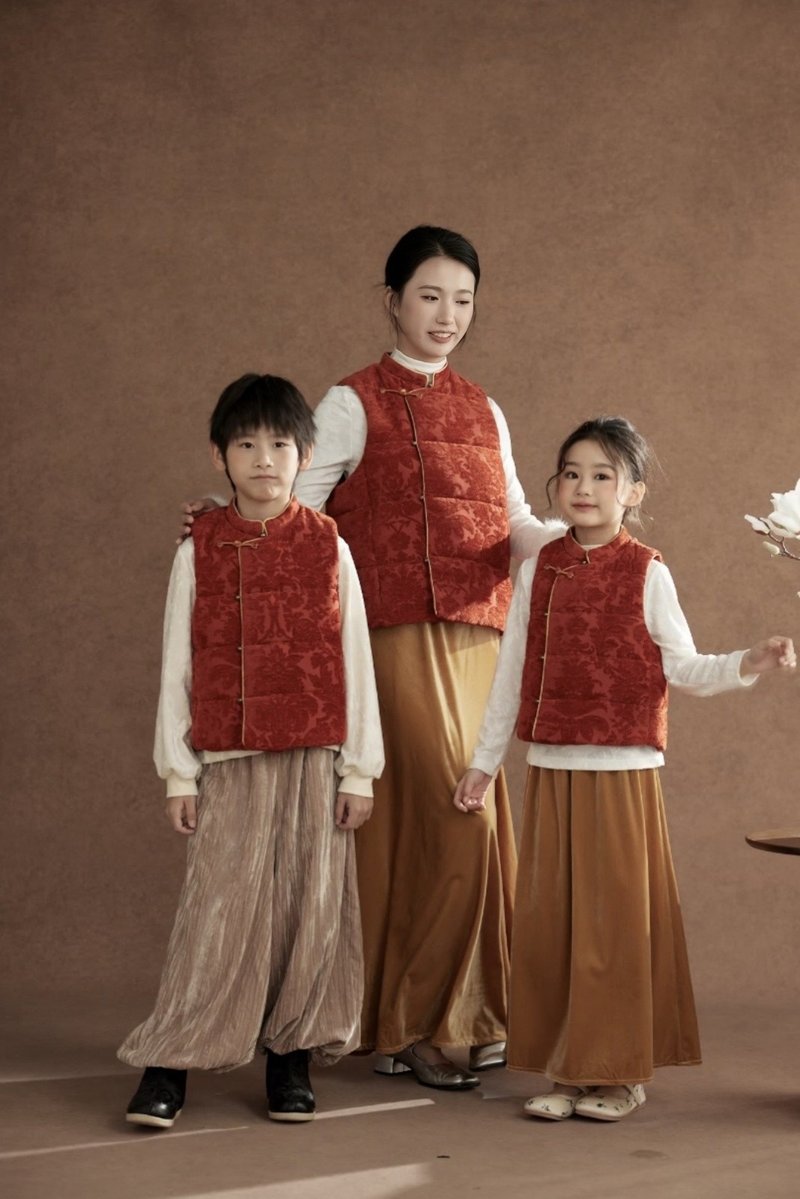
- The family joins the call dressed for the occasion — even one festive piece changes how seriously a five-year-old takes the moment (see our family outfit coordination guide).
- The child delivers their greetings first — the phrases and gestures from our New Year greetings guide work perfectly over video.
- Grandma or grandpa sends the digital envelope while everyone watches; the child sees it arrive in real time.
- The child says thank out loud, on camera, immediately — which is the whole etiquette of receiving, just without the two hands.
The Etiquette, Translated to a Screen
Receiving a red envelope in person has rules: two hands, a bow or a nod, thanks before the packet is opened, no tearing into it in front of the giver. None of that is lost online — it just moves:
- Thanks first, open second. Teach your child to say “xie xie” (or their own thank-you) out loud on the call before anyone taps the envelope open. The delay is the respect.
- Receive together. In practice the envelope usually lands on a parent’s account; the parent is standing in for the child’s two hands. Say so on the call: “we received it, she is saying thank you.”
- No asking. The same rule as in person — a child never prompts for the envelope. The elder offers; the child receives and thanks.
- A thank-you back, later. A short voice message, a drawing photographed and sent, or a thirty-second video of the child saying thank you closes the loop beautifully. Grandparents screenshot these; we are not exaggerating.
Helping Grandparents Send One
Sometimes the flow reverses: the grandparents are abroad and the children are the ones visiting China, or the tech-savvy teenager wants to send the first envelope to grandma — which, by tradition, is a sweet inversion elders genuinely enjoy receiving from adult grandchildren. A few practical notes for the sending side: amounts are usually lucky numbers (even amounts, often involving 8, and amounts ending in 6 or 8), avoid amounts of four if the family keeps that custom, and a one-line note typed with the envelope — “for our little dragon’s New Year” — turns a transaction into a keepsake. If an elder finds the app confusing, a five-minute practice call before New Year’s Eve, where the family sends a tiny test envelope and the elder sends one back, removes all the stage fright from the real moment.
The Money Lesson Hiding in the Packet
Hongbao is the most natural first money lesson a child can get, because the money arrives with a story attached. Many families use a simple three-jar routine: some to save, some to spend, some to share. Younger children grasp it instantly if the jars are physical and labeled with pictures; older kids can keep a tally and watch the save jar grow toward a goal. Two habits worth adopting from the start:
- The envelope total is the child’s, in their name — in many Chinese families, the hongbao a child receives is kept for them, and announcing “this is yours, and here is how we will care for it” builds exactly the right association.
- One wish list, written after New Year. Waiting a week between receiving and spending is the gentlest impulse-control training there is, and it gives the child something to look forward to after the fireworks fade.
Safety Basics Parents Should Handle
- Accounts belong to adults. Children receive envelopes on a parent’s account, always; no child needs their own payment profile for a festival tradition.
- No passwords shared on calls. If an elder needs help setting up, do it on a separate private call, not on the family screen where a six-year-old is memorizing every digit.
- Keep amounts small and ceremonial for the child — a modest amount the child can actually hold, with the larger family gift handled adult-to-adult, keeps the focus on the ritual rather than the number.
- Send only through apps you know. Real hongbao travel inside the messaging app the family already uses — never through links sent by strangers, a warning worth stating plainly because scam red envelopes do circulate in festival season.
What to Wear for the Video Call
The camera frames roughly the waist up, which is why a statement top does more work than a full costume: a brocade vest, a cape collar, or a festive jacket over a soft base reads beautifully on video and stays comfortable for a long call with relatives. Families who do calls on both New Year’s Eve and New Year’s Day often keep one “camera outfit” per child — the collection page has pieces built exactly for this, and our New Year’s Eve outfit guide covers the late-night version. If the call runs long and a toddler melts down on camera, nobody is judging; the envelope will still be lucky.
Frequently Asked Questions
Is a digital red envelope a “real” red envelope?
Yes — the tradition is about elders giving children lucky money in red, and the app version is simply the current wrapper. In China the digital form has been mainstream for years; elders who grew up with paper packets often still prefer sending digitally because it is faster and the money arrives instantly.
How much money is normal for a child’s hongbao?
It varies hugely by family and region, so treat any single number as a family decision rather than a rule. Common practice favors lucky-number amounts — even figures, often with an 8 — and small, symbolic amounts for young children. What the child will remember is the moment, not the digits.
Can we do digital and paper envelopes in the same year?
Many families do exactly that — paper envelopes from relatives who visit in person, digital ones from relatives overseas. Children handle this fine if the receiving ritual is identical: greetings first, thanks before opening, a thank-you message afterward.
What if the grandparents find the app confusing?
Do a practice run before New Year’s Eve: a short call where each side sends a tiny test envelope back and forth. Write the steps on a card for the elder, keep the amounts trivial, and the real exchange will feel routine. Patience on the practice call is itself a New Year gift.
When should the child say thank you if the envelope arrives while we are asleep?
Time zones are real. A thank-you voice message the next morning works perfectly — grandparents sending from China expect the delay and, frankly, a sleepy-voiced thank-you video at their breakfast is one of the more charming outcomes of the whole arrangement.