
A first hanfu is one of those purchases parents photograph more than they expect to: the padded jacket, the pleated skirt, a child who has just learned that twirling makes the skirt do something wonderful. But most guides about children’s hanfu skip the questions that actually decide the purchase when the wearer is two or three years old. Does it come small enough? Can a toddler get it on without a wrestling match? Will it survive a washing machine, a snack, and a playground? This guide answers those in order, so the first hanfu becomes a favorite rather than a shelf ornament.
When Is a Child Ready for a First Hanfu?
Honestly framed: the collection starts at the 90 cm size tag, which fits children roughly 85–95 cm tall — around US size 2T–3T, or about age two. Below that height, a hanfu is hard to fit well and harder to wear safely, so “a baby’s first hanfu” in practice means a toddler’s first hanfu, at the stage when a child walks steadily and announces opinions about clothing. That is also, conveniently, the age when the twirl discovery happens, which is the entire magic of a pleated skirt.
If you are shopping for a first-birthday celebration, families usually buy the 90 cm size a few months ahead and let the child grow into it — our zhuazhou ceremony guide explains the tradition and how dress-up fits into it. For the actual wearing, age two to three is the sweet spot for a first outfit.
What Makes a Good First Hanfu
Three construction choices separate a first hanfu a toddler wears weekly from one worn once for a photo. First, soft, quilted fabric: a padded cotton-blend jacket feels like the sweatshirts a child already wears, so the garment does not register as “costume” the moment it goes on. Second, front closures a parent can operate one-handed: the frog-button jacket below closes down the front with knotted buttons, which means no wrestling a squirming child into a back-zip. Third, forgiving silhouettes — an A-line skirt that clears the knees and a jacket with room for a long-sleeve shirt underneath.
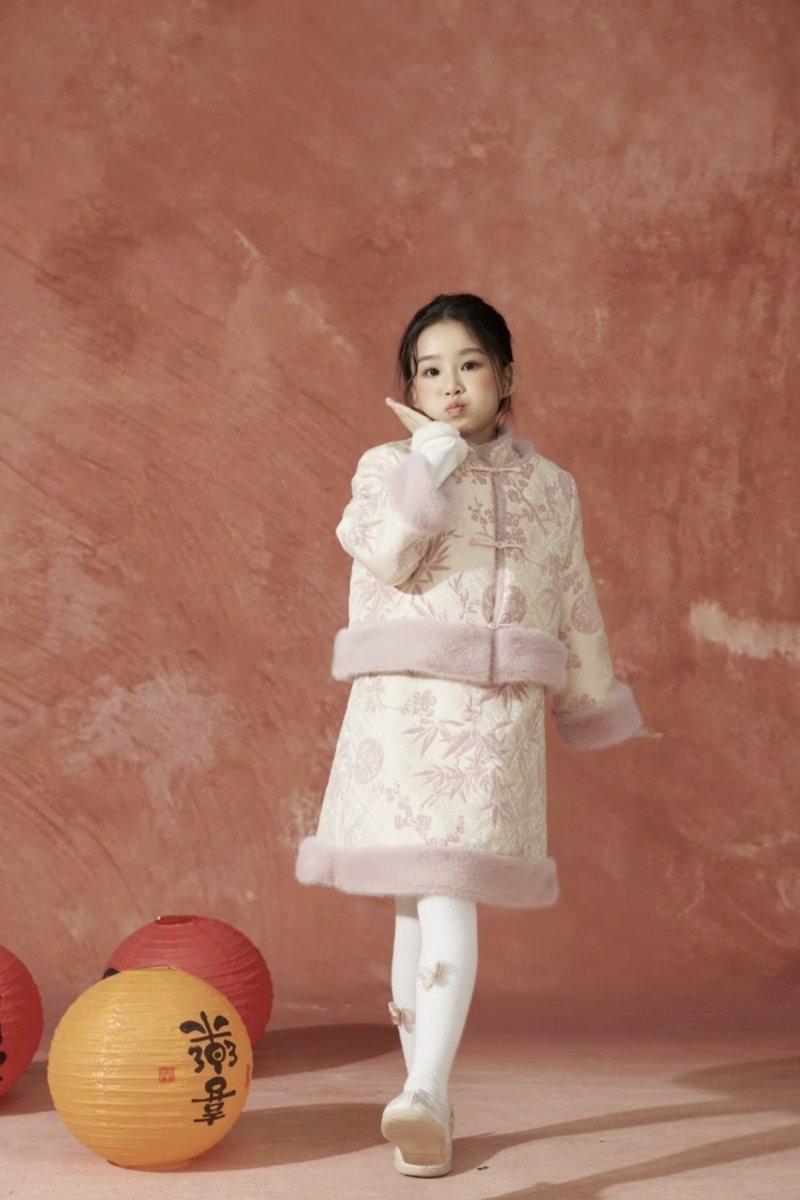
The two-piece padded set above is close to the ideal first hanfu: the jacket fastens at the front, the plush trim is soft at the collar and cuffs, and the whole outfit reads as a warm winter set rather than fragile dress-up. For a girl who already loves dresses, a one-piece quilted dress is the even simpler option.
Sizing: Read the Chart in Centimeters First
Children’s hanfu is sized by height in centimeters, not by US age labels — age labels vary far more between brands than height does. Measure your child’s height, match the row, and treat the US columns as translations rather than the starting point:
| Size tag (cm) | Child’s height | Approx. US age | Approx. US size |
|---|---|---|---|
| 90 cm | 85–95 cm | 2–3 years | 2T–3T |
| 100 cm | 95–105 cm | 3–4 years | 3T–4T |
| 110 cm | 105–115 cm | 4–5 years | 4T–5T |
| 120 cm | 115–125 cm | 6–7 years | US 6–7 |
| 130 cm | 125–135 cm | 7–9 years | US 7–8 |
| 140 cm | 135–145 cm | 9–10 years | US 10 |
| 150 cm | 145–155 cm | 11–12 years | US 12 |
| 160 cm | 155–165 cm | 13–14 years | US 14 |
Each size covers a 10 cm range, and children at a boundary should always size up — hanfu silhouettes carry growing room gracefully, and hems are cut to be worn lower as the child grows. The full cm-to-US sizing guide breaks down skirt length, sleeve and torso measurements piece by piece, and its “buy one size up” rule applies doubly to first purchases.
Safety: What to Check on Small Sizes
Toddler garments earn trust through construction details, not labels. The collection is produced to China’s GB31701-2015 Class A children’s textile safety standard — the strictest class of that standard, intended for garments worn against young children’s skin. On top of the standard, run the same checks our toddler safety checklist recommends: frog buttons should be stitched through the fabric rather than tacked on, hoods and necks should carry no drawstrings, and any decorative trim should survive a firm tug. Padded sets with plush edging do particularly well here, because the trim is sewn into the seam rather than glued.
Can It Go in the Washing Machine?
Usually yes, with one rule: read the care note on the listing. Quilted everyday pieces in cotton blends are home-launderable on a gentle cycle; plush-trimmed and brocade pieces prefer a gentle hand wash to protect the pile and the pattern. Either way, cold water, mild detergent, and air drying — a toddler garment that demands dry cleaning is a garment you will resent by February. Our wash-and-store guide covers the full routine, including how to store pleated skirts so the pleats survive the season.
Can a Toddler Actually Move in It?
The honest test is the squat: a child who can squat, stand, and climb without adjusting the outfit will wear it all day. Padded jackets with side room and A-line skirts are built for exactly this — the silhouette looks formal in photos and behaves like play clothes in motion. Avoid first-hanfu styles with tight armholes or long, narrow hems; a skirt that brushes the shoe is charming for five minutes and a trip hazard for the afternoon.
Making the First Wearing a Good One
The first wearing decides the relationship. Pick a low-stakes occasion — a family dinner, a walk to see the lights — rather than a long ceremony. Let the child practice twirling at home first; it converts novelty into ownership. And keep the first outfit simple: a quilted dress or a two-piece set, ordinary shoes, no new accessories competing for attention. The peach-toned quilted dress below is the archetype — soft enough to nap in, photogenic enough that you will not need to ask twice.

From First Hanfu to Family Tradition
First hanfu purchases have a way of multiplying. A child who wears hers to a winter dinner sets up the matching parent-child photo everyone else wanted; our family matching guide shows how the sets line up across sizes. And with Lunar New Year arriving on February 6, 2027, a first hanfu bought this winter gets its natural sequel six weeks later — our article on why children wear red explains the tradition the season will hand her next.
Frequently Asked Questions
What is the smallest size available?
The collection starts at the 90 cm tag, fitting children roughly 85–95 cm tall — about US 2T–3T, or age two. For younger babies, buy ahead and let them grow into it.
Is hanfu appropriate for a toddler’s everyday wear?
The quilted cotton-blend pieces are, yes — they are designed as winter clothing first, with soft linings and closures built for small children. Save the formal brocade for occasions.
How do I wash a padded hanfu jacket?
Gentle machine cycle if the care note allows, otherwise a gentle hand wash; cold water, mild detergent, air dry. Plush trim stays softest when the jacket is dried flat.
Is it safe if my child still mouths everything?
At the 90 cm size the closures are sewn-through frog buttons with no loose parts, and the standard behind the collection (GB31701-2015 Class A) governs exactly this age. Still, supervise the first wearing, as with any new garment.
What should my child wear underneath?
A soft cotton long-sleeve shirt and thick tights in winter; a plain tee in warmer weather. The layers go under the hanfu, so nothing shows at the collar except, comfortably, warmth.
Do you supply boutiques that want a toddler line?
Yes — wholesale runs from 12-piece minimums at $45–120 per set on the wholesale page, and our plum-blossom padded set spotlight is an example of the winter two-pieces that anchor a toddler wall.
A first hanfu asks little more of a parent than any good winter coat: measure the child, check the closures, plan the wash. What it gives back is considerably more — a garment with a story, a skirt built for twirling, and a photo you will keep. The fabrics and the design approach behind them are described on the about page, and the collection page lists current sizes from 90 cm up.