
Every autumn the same question arrives in our inbox, usually around the first cold snap: “My daughter loves her hanfu dress — but will she freeze in it in December?” It is a fair question, and the answer is built into how children’s hanfu is made. Winter hanfu is not one thin robe; it is a layered system — a soft base shirt, a decorative brocade vest, warm velvet below, and a quilted padded coat on top. Dressed this way, a child stays warm on a snowy playground and still looks unmistakably festive at a family dinner.
This guide walks through the layering formula we recommend to parents, piece by piece, from November’s first frost through Lunar New Year.
Layering Is Already Part of the Tradition
Layered dress is not a modern workaround — it is how hanfu was always worn. Historical outfits across the Ming and Song dynasties stacked inner garments, crossed-collar jackets and outer vests precisely because the seasons demanded it. What modern children’s winter sets have done is swap silk gauze for brushed cotton blends, and quilt the outer layers. The silhouette your child wears in January — vest over shirt, wide trousers below — would look familiar to a child from six centuries ago. The only real innovation is the washing machine.
The Three-Layer Formula: Shirt, Vest, Trousers
The everyday winter formula we recommend has three parts: a long-sleeve base shirt in a soft cotton-blend, a jacquard vest with a mandarin collar and knot closures over it, and relaxed velvet trousers below. The lake-blue medallion set below is a typical example: the brocade vest carries the traditional look, while the shirt and the velvet do the actual insulating.
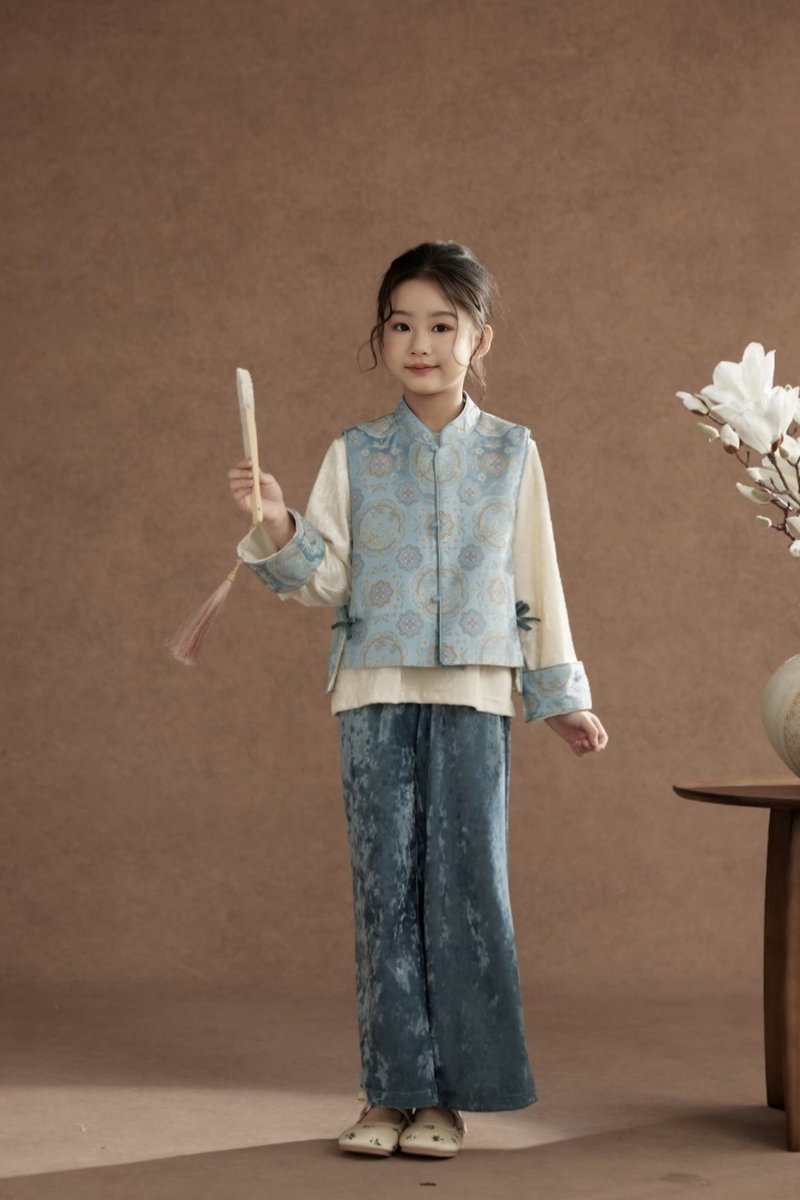
The formula has one practical superpower: the vest is the decorative layer, so a child can slip it off indoors — at school, at a restaurant, at grandma’s table — and still be wearing a complete outfit. Nothing needs to be unwound or re-tied to run to the bathroom or sit cross-legged on a classroom floor.
Base Layers: What to Look For
The base shirt matters more than any visible layer, because it sits against skin all day. Look for:
- Cotton or washable silk blends rather than plain synthetic satin — our fabric guide for kids’ hanfu compares the common options in detail.
- Smooth, flat seams at the neckline and cuffs; children notice a rough seam within minutes.
- Slightly snug but not tight — the base layer should leave room for air, which is what actually insulates.
A plain cream or white base shirt is the most versatile choice, because it disappears under every vest color in a collection. Our wash-and-store guide covers how to keep base layers rotating through the week without wearing them out.
The Mid Layer: A Brocade Vest Does the Work
The vest is where the festival look lives. Woven jacquard brocade with a medallion or auspicious pattern, a standing collar, and traditional knot buttons read as “holiday outfit” from across a room — yet the sleeveless cut keeps arms fully free. The goose-yellow plush-trimmed vest below is a good example: soft trim at the edges, a warm knit shirt underneath, and a trim skirt that still allows a full run across the yard.
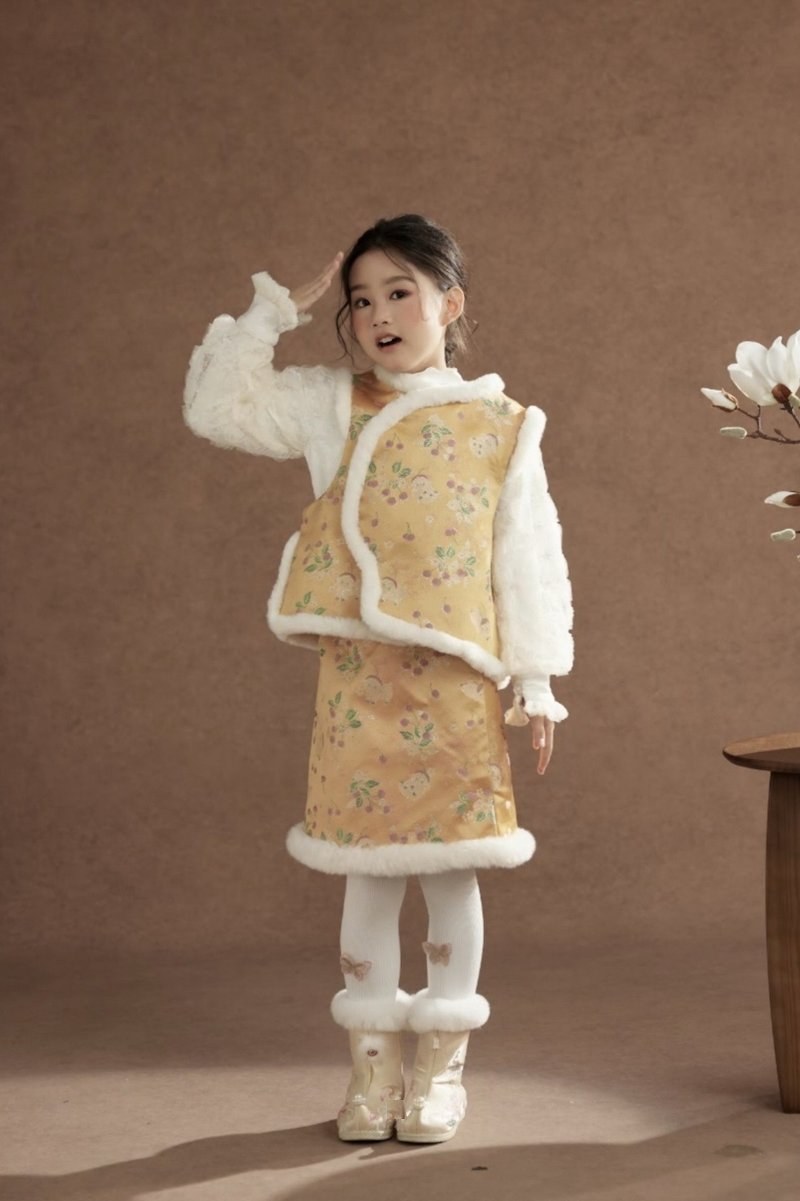
For the coldest weeks, look for vests described as quilted or plush-lined rather than single-layer brocade; the difference outdoors is significant, and indoors the vest still comes off the moment the heating does its job.
The Outer Layer: Padded Coats for Real Cold
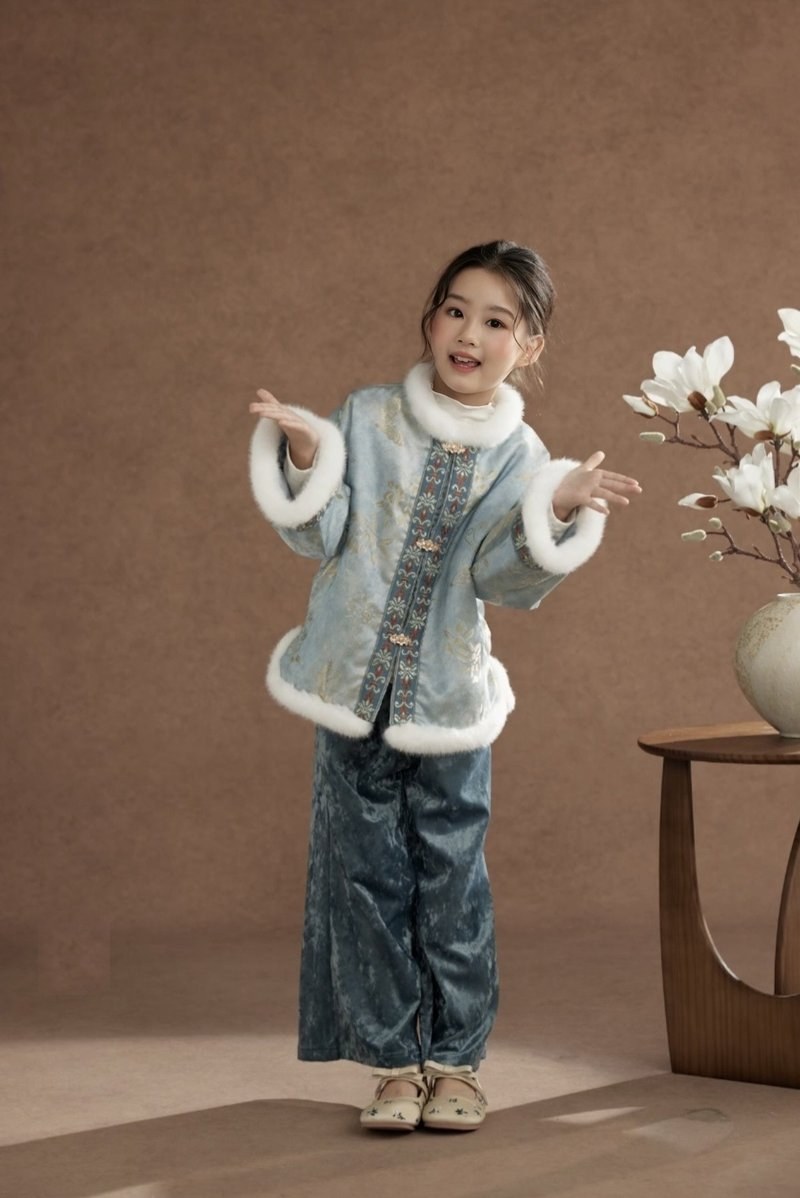
For the walk to school, the evening lantern stroll or the Dongzhi dinner run — our winter solstice guide has the details of that festival — a front-opening quilted padded coat is the outermost piece. The lake-blue coat below has a plush fur-look collar and cuffs and traditional knot closures down the front, and it is cut generous enough to wear over the vest layer without burying a small child in bulk.
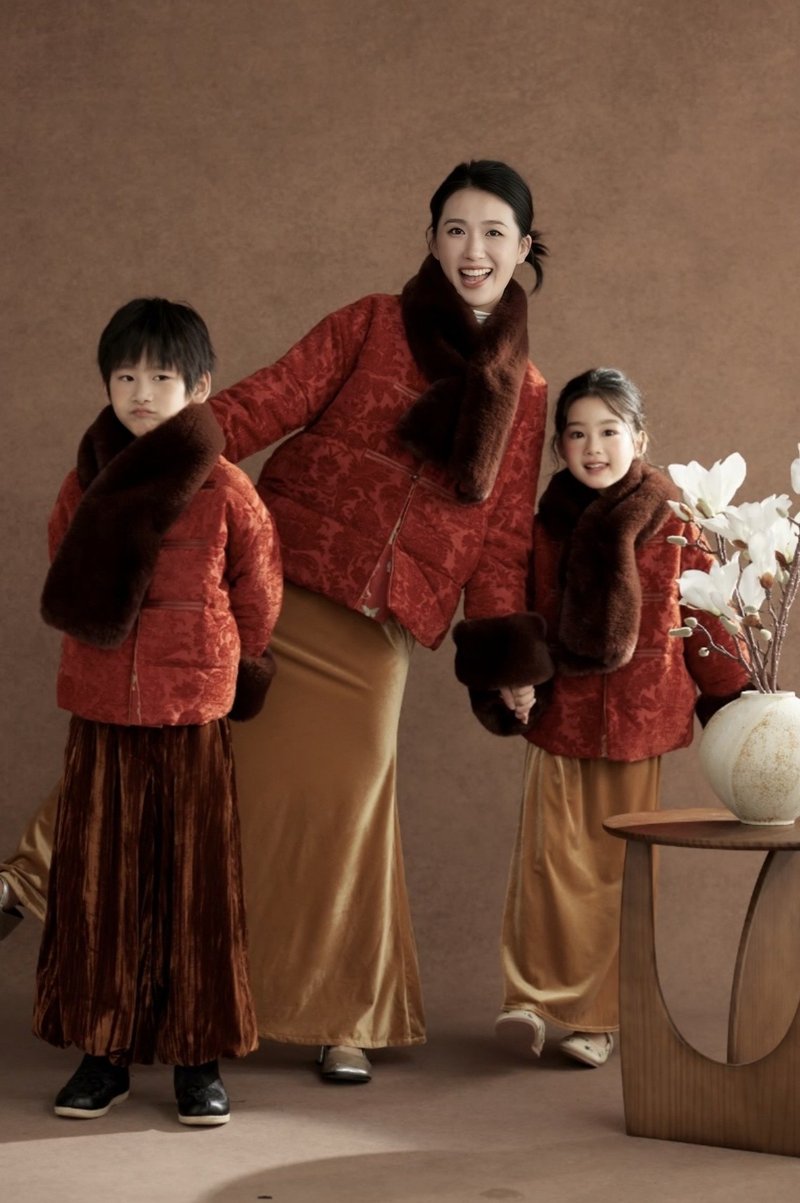
Boys’ options follow the same logic: the ink-bamboo panda-print quilted jacket in the current collection pairs a playful print with the same front-opening, layer-friendly cut. And for the family photo, padded coats come in parent-child versions too — the red brocade fur-collar coat below is cut for both adults and children, which turns the coldest day of the year into the best-dressed one. Our holiday outfit roadmap plans those photo weeks out.
Dresses, Tights and Girls’ Winter Silhouettes
For girls who prefer a dress, the winter formula adapts rather than changes: a brocade or velour dress over a plush long-sleeve base, thick opaque tights below, and the same padded coat on top. A fur-trimmed hem keeps the silhouette festive even when the dress itself is the only visible layer indoors. One of our favorite new-year dresses — a red-and-gold auspicious-beast design with a velvet yoke and cream plush trim — is featured in our new-year dress spotlight, worn exactly this way.
Sizing When You Layer: Measure First, Size Up One
Children’s hanfu is sized by height in centimeters, not by US age labels — and because winter outfits add a base layer and a vest, the usual advice is to size up one when your child sits between two sizes. Measure height, match it here:
| Height (cm) | Approx. US size / age |
|---|---|
| 100 cm | 3T–4T |
| 110 cm | 4T–5T |
| 120 cm | 6–7 years |
| 130 cm | 8 years |
| 140 cm | 10 years |
| 150 cm | 12 years |
The full hanfu sizing guide covers measurements piece by piece, including how much growing room a winter vest realistically needs.
The Three Questions Parents Always Ask
Can all of this be machine washed? The daily-wear base fabrics are cotton and washable silk blends chosen for easy home care; the decorative brocade layers are washed gently and separately, following our care guide. Is it safe for toddlers? The collection is produced to China’s GB31701-2015 Class A children’s textile safety standard, with closures designed for young children and no drawstrings at the hood or neck — our toddler safety checklist explains what to look for on any children’s outfit, not just ours. Can kids actually move in it? Yes — wide-leg trousers, sleeveless vests and front-opening coats leave running, squatting and chair-climbing unaffected, which is the whole point of the formula.
Frequently Asked Questions
How cold is too cold for a brocade vest outdoors?
Below freezing, the vest alone is not enough — that is what the padded coat layer is for. The vest stays on as the mid layer and the coat goes over it.
Will the vest still fit over a base shirt if I buy the “usual” size?
Winter sets are designed to stack — vests are cut with extra chest room. If your child is between sizes, still size up for the growing room.
What should my child wear under a hanfu dress in winter?
A plush or brushed long-sleeve base and thick tights. Skip bulky hoodies under a fitted yoke; they bunch at the collar.
Do padded coats come in parent-child sizes?
Several coats and vest sets in the winter collection do — the red brocade fur-collar coat shown above is one of them.
How many layers is too many for a toddler?
Three plus an outdoor coat is the practical ceiling. If a toddler is sweating indoors, remove the vest — overheating is a bigger comfort issue than cold.
Warmth, in short, is not a reason to skip hanfu this winter — it is just a matter of dressing in the order the outfits were designed for: base, vest, velvet, coat. Every piece mentioned here is on the collection page; if you are a boutique rather than a parent, the wholesale page covers pricing and terms, and our about page tells the story behind the brand.
[…] Late autumn and winter: swap to a thin long-sleeve thermal or a fine cotton knit, and add fleece-lined leggings under wide-leg trousers and skirts. The rule of thumb is thin and close-fitting rather than thick and bulky — a base layer should disappear under the outfit, not inflate it. For a full winter strategy that goes beyond the skin layer, see our guide to winter layering for kids in hanfu. […]