
If you have ever opened a kids’ hanfu shop at nine in the evening trying to decide between a red set and a lake-blue one, you are not alone. Color is the first thing people notice about a hanfu, and in Chinese culture it is rarely just decoration. Each shade carries a story: wishes for luck, hopes for growth, memories of festivals. The good news is that you do not need to study Chinese history to choose well. This guide walks through the colors you will actually see in children’s hanfu collections, what they traditionally mean, and how to match them to the occasions on your family calendar.
Why color matters in a child’s hanfu
Traditional Chinese dress has always used color as a kind of quiet language. For festivals, grandparents may gently expect red. For school culture fairs, almost anything works. For a family photoshoot, the shade you choose sets the whole mood of the picture. Understanding a few conventions helps you pick outfits that feel intentional rather than random, and it gives you a nice story to tell your child while they wear it.
One caveat before we start: these meanings are traditions and folklore, not strict rules that someone will enforce. Chinese families themselves mix and match freely, especially for children. Treat this as helpful context, not homework.
Red: celebration, luck and the festival favorite
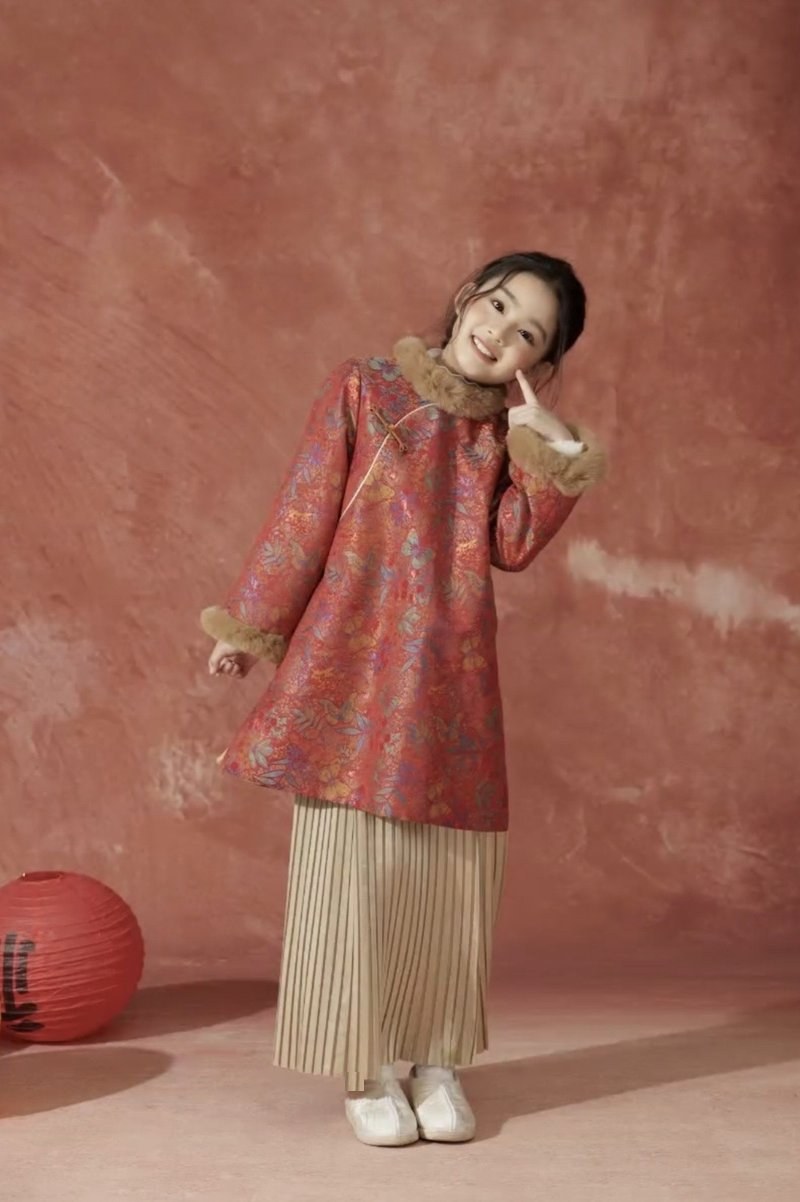
Red is the sound of firecrackers in clothing form. In Chinese tradition it is the color of joy, celebration and protection, which is why it dominates Lunar New Year, birthdays and weddings. If your child will attend a Chinese New Year dinner, a temple fair or a family photoshoot in January or February, red is the natural choice, and relatives will notice and appreciate it.
Red also photographs beautifully in winter, especially when it is paired with gold embroidery or a plush fur-style collar. We cover the deeper story in our guide to why Chinese kids wear red at Lunar New Year. For boys who find red too loud, wine red, navy and deep green carry the festive feeling in a quieter register.
Gold and yellow: warmth, harvest and a royal history
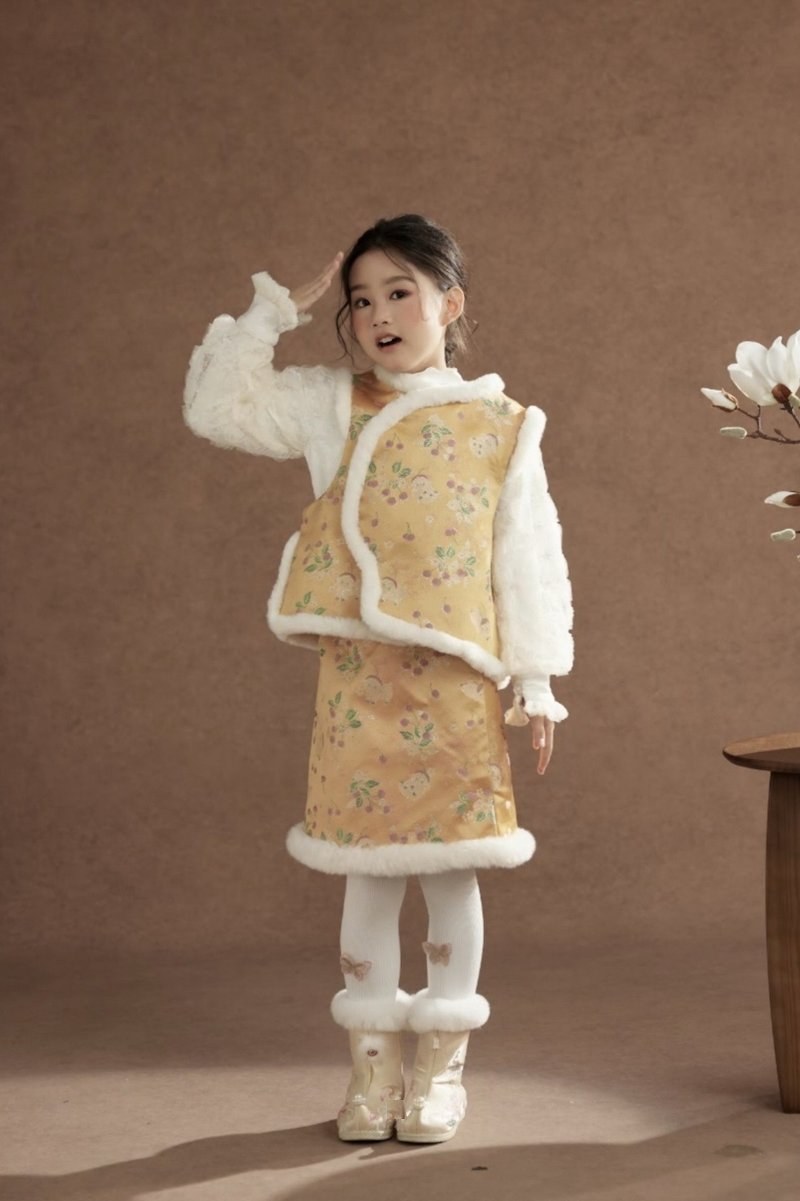
Yellow was historically the color of the imperial household; for centuries, deep court yellow was reserved for the emperor and forbidden to ordinary families. That strict rule is long gone, but it left yellow with an aura of importance. In children’s wear today, softer shades like goose yellow or champagne are used to suggest warmth, harvest and gentle optimism.
Soft yellows are a smart pick for stage performances, school events and autumn photos, and they pair well with plush or jacquard textures. If you are dressing a child who dislikes bold colors, a yellow or champagne vest over a simple shirt gives festive flavor without full-on red.
Blue and green: calm, growth and the scholar’s palette
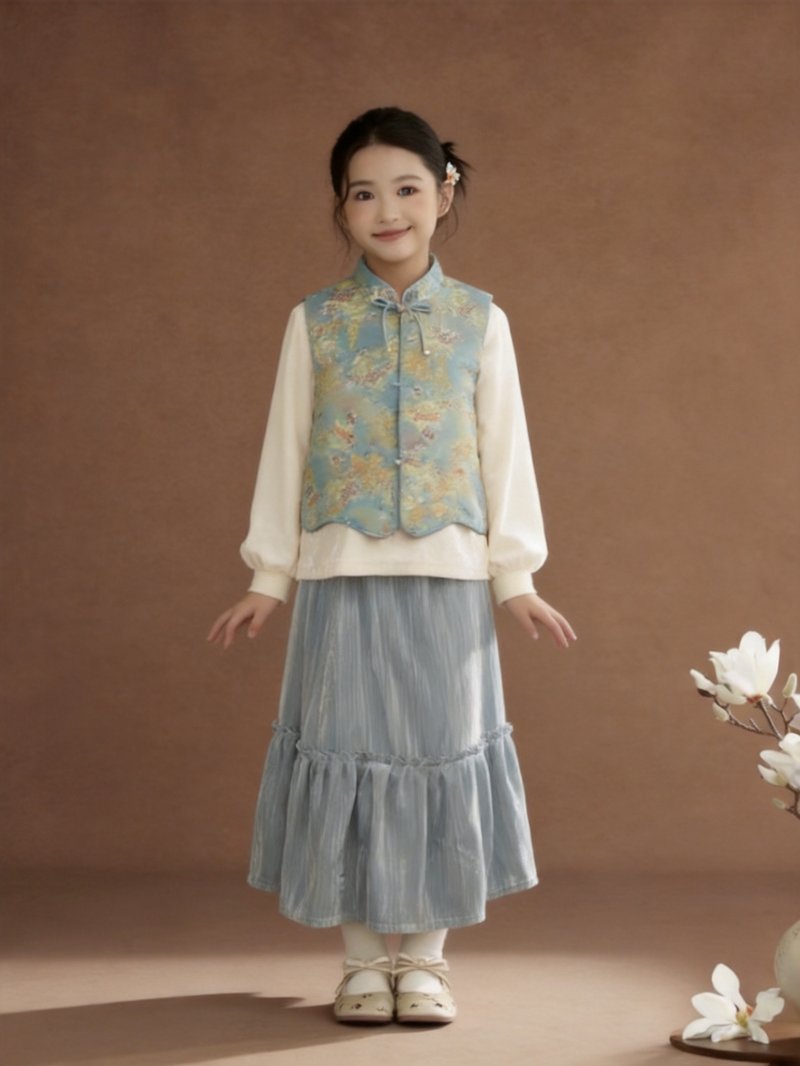
Blues and greens read as calm, fresh and growth-oriented. In classical aesthetics, deep blues were associated with scholars and the natural world, while greens evoke spring, renewal and young plants, a fitting image for children. These shades are also the most forgiving for everyday wear: a lake-blue brocade vest over a shirt does not scream “costume,” so it works for school cultural days, museum visits and dinners.
If your family is new to hanfu, blue or green sets are a gentle entry point. They coordinate easily with regular winter clothes such as white shirts and neutral coats, which makes them practical in Western wardrobes too.
Pink and soft pastels: springtime and sweetness
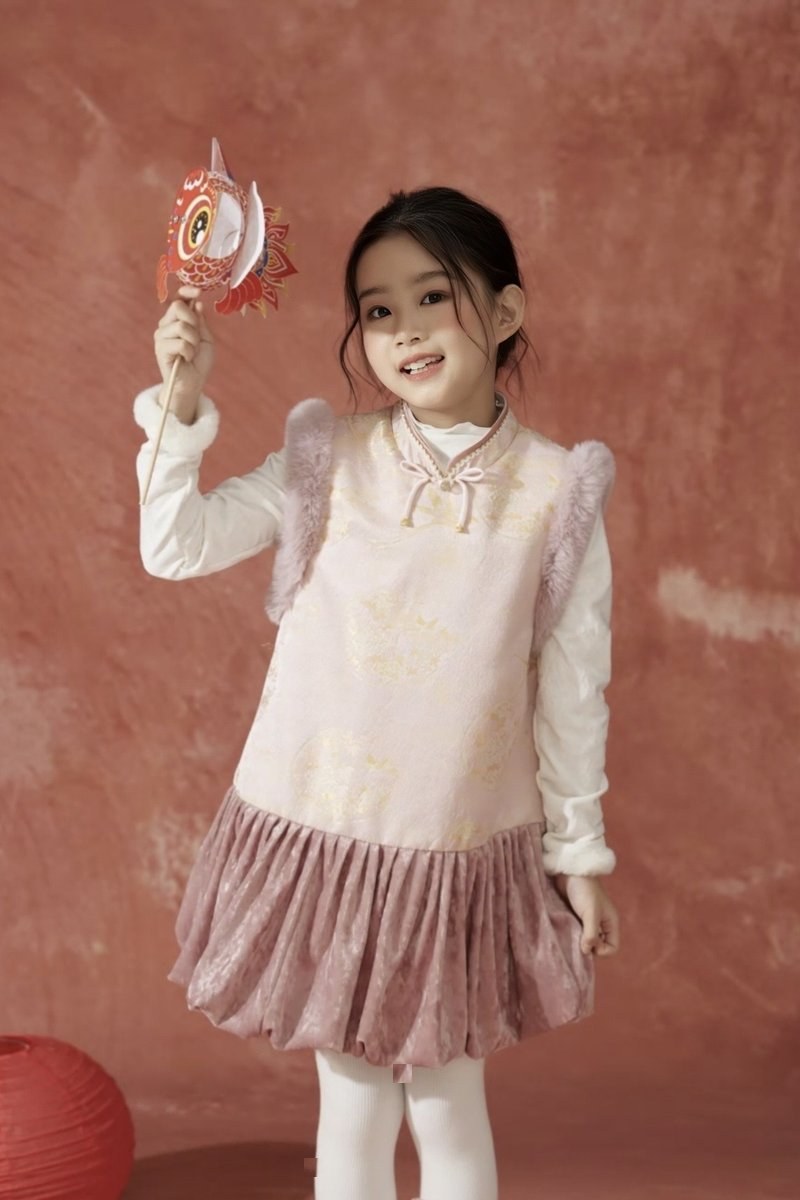
Pinks and pastels are the modern children’s layer on top of old symbolism: peach and plum blossoms signal spring and youth, so a soft pink dress carries a hint of blossom season. These shades shine at birthday parties, spring photoshoots and flower-girl style duties. They are also the easiest colors for siblings to coordinate, since pastels sit quietly next to each other in photos.
Wine red and winter deeps: the velvet season
Between November and February, deep shades come into their own. Wine red keeps the festive symbolism of red but reads more grown-up and more winter-appropriate, especially in velvet. It is also the easiest color for parents to coordinate with their children’s outfits: a wine-red velvet vest for mom next to a red brocade set for a child looks deliberate and warm in family photos.
We put this into practice in our look at wine-red velvet vest sets for moms’ Lunar New Year photos, which shows how a parent’s outfit can echo a child’s without being an exact match.
White and black: lovely, but mind the occasion
In modern Chinese children’s fashion, white shirts and black trousers appear constantly as layering pieces, and no one blinks. The older sensitivity is about all-white or all-black outfits at weddings and New Year celebrations, because those tones are historically linked to mourning. The practical rule: white or black as a base layer is fine everywhere; if you are attending a traditional festival or a family banquet, add a colored vest, jacket or accessory so the overall look is festive. A white turtleneck under a wine-red vest, for example, is a classic winter formula.
Matching color to the occasion: a quick table
| Occasion | Safe color picks | Why |
|---|---|---|
| Lunar New Year (Feb 6, 2027) | Red, gold, wine red | Celebration and luck; relatives approve |
| Birthday / zhuazhou | Red, pink, pastels | Joyful, photographs well indoors |
| School cultural day | Blue, green, yellow | Calm and wearable, not costume-like |
| Family photoshoot | Any, coordinated | Pick one dominant shade, echo it across family |
| Chinese wedding | Pastels, gold, blue | Festive without competing with the couple |
Care, safety and comfort: the questions parents actually ask
Color is fun, but the practical trio matters more for daily life. Our full fabric guide compares materials in detail; the short version is below.
- Washing: cotton and linen sets handle a gentle machine cycle; velvet and brocade pieces prefer gentle hand washing or a delicate bag cycle in cold water. See our walkthrough on how to wash and store kids’ hanfu.
- Safety: look for secure frog buttons, no loose drawstrings at the neck, and fabrics tested to children’s clothing standards; our collection is CNAS-lab-tested to GB31701-2015 Class A.
- Movement: traditional cuts are loose by design. Wide-leg trousers, elastic-backed waists and two-piece sets let kids run, sit cross-legged and dance without fuss.
Frequently asked questions
What color hanfu should my child wear for their first Lunar New Year?
Red or wine red is the safe, joyful answer. Gold accents add ceremony. If your toddler finds red overwhelming, a red vest over a neutral shirt keeps the tradition with a softer feel.
Do colors have to match exactly between siblings or parents?
No. Echoing one shade across outfits, for example wine red on mom and red-gold brocade on a child, looks more natural than identical matching.
Will dark colors like navy or wine red look too serious on kids?
Not when the fabric and details are child-friendly. Plush collars, jacquard patterns and gold trim keep deep shades playful.
Can my daughter wear blue or green to New Year events?
Yes, especially when the outfit includes festive elements like brocade or embroidery. The red tradition is strong but not exclusive for children.
How do I choose the right size?
Size by height in centimeters rather than age. Our kids’ hanfu sizing chart maps heights like 110 cm to US ages, and the general rule is to size up one for layering over winter clothes.
Where can I see these colors on real outfits?
Browse the current collection to see red-and-gold brocade, lake blue, goose yellow, pink and wine-red sets, all photographed on real models.
Ready to dress the whole family in one palette? Families and photographers can browse the collection directly, and boutiques can request wholesale details on our wholesale page.
[…] The scalloped collar is a modern child-sized reading of the yunjian – the cloud-shaped shoulder cape worn in Chinese dress for centuries, originally as a layered collar piece that spread into a decorative silhouette. Historical versions were elaborate; this one keeps only the outline, which is why it reads traditional without tipping into costume. Parents who enjoy the cultural side of the line will find more of these translations in our guide to color meanings in children’s hanfu. […]
[…] The round-flower motif on this fabric belongs to the tuanhua tradition – circular medallions woven into Chinese dress for centuries as a symbol of wholeness and good roundness of fortune. On children’s clothing today it keeps the symbolism and drops the formality, which is exactly the balance this set strikes. Families curious about what the colors and motifs mean will find a full walkthrough in our guide to hanfu colors and meanings. […]